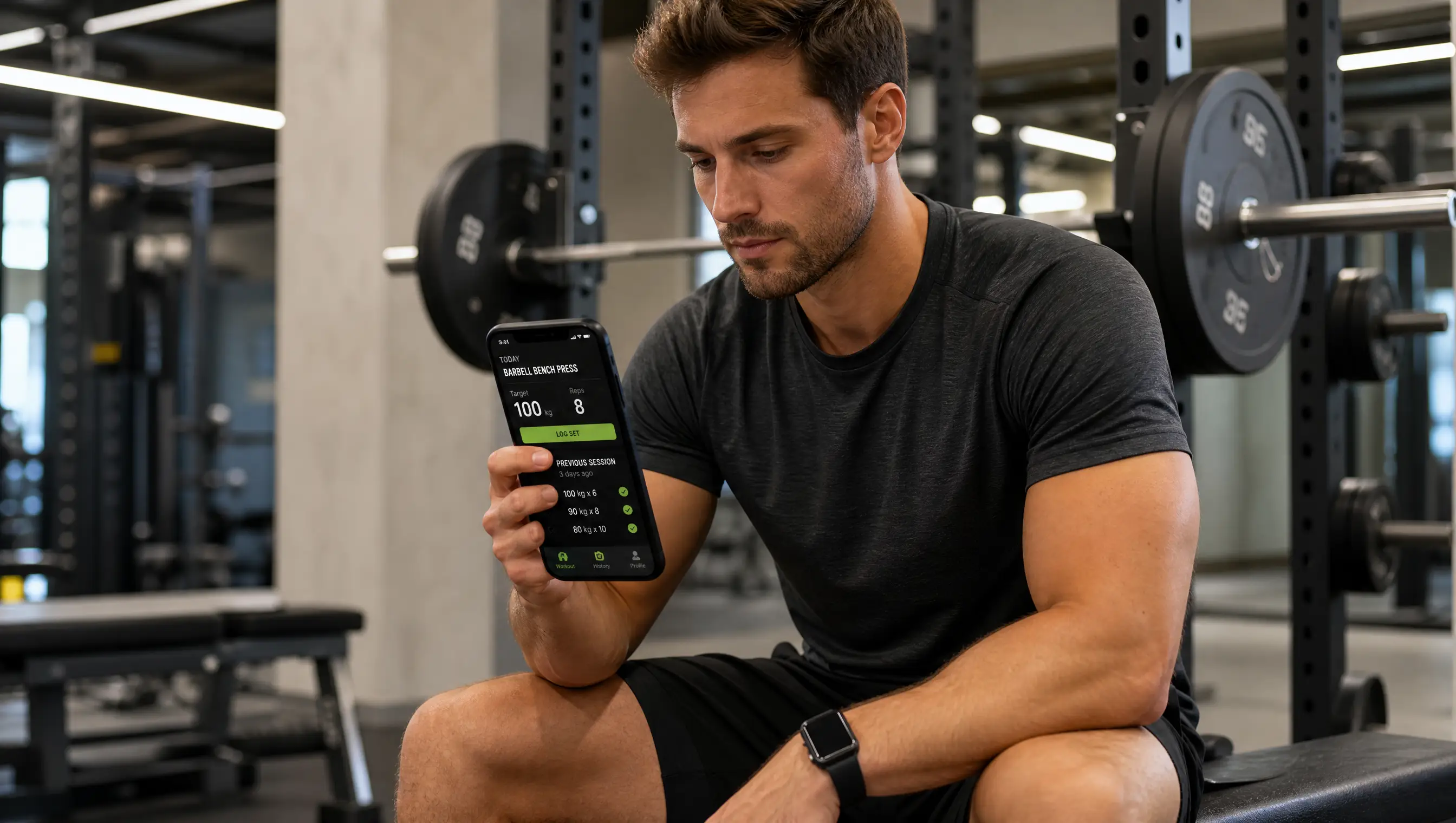
HRV for Beginners: What Heart Rate Variability Means for Your Training
If your watch shows an "HRV" number and you've no idea what it means, you're not alone. Heart rate variability is the single best everyday signal of how recovered your body is — and once you understand it, it changes how you train. Here's the plain-English version, no sports-science degree required.
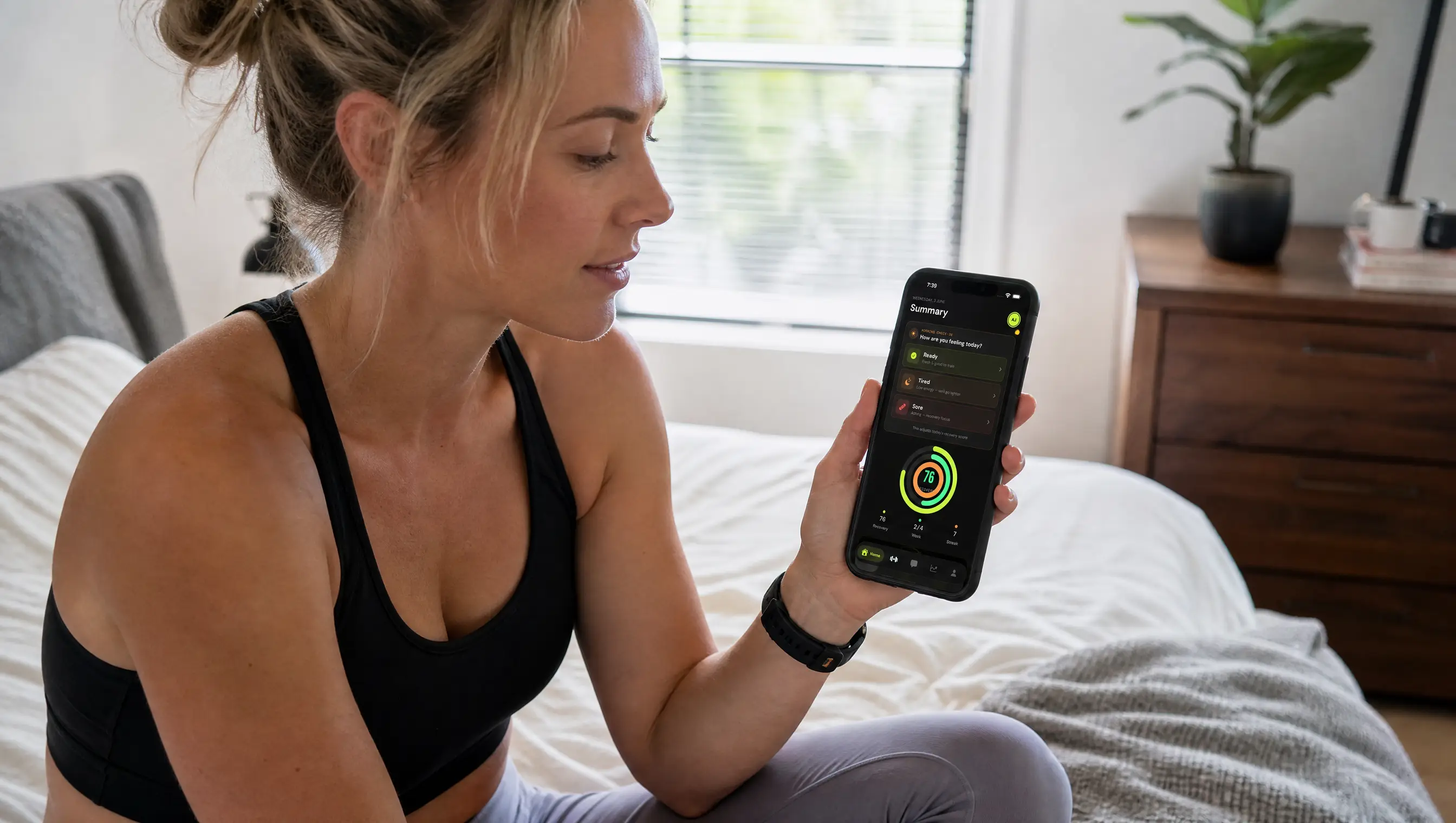
What Is HRV, Really?
Your heart doesn't beat like a metronome. Even at a steady 60 beats per minute, the gap between each beat varies slightly — one might be 0.9 seconds, the next 1.1. Heart rate variability (HRV) is the measure of that variation, usually shown in milliseconds.
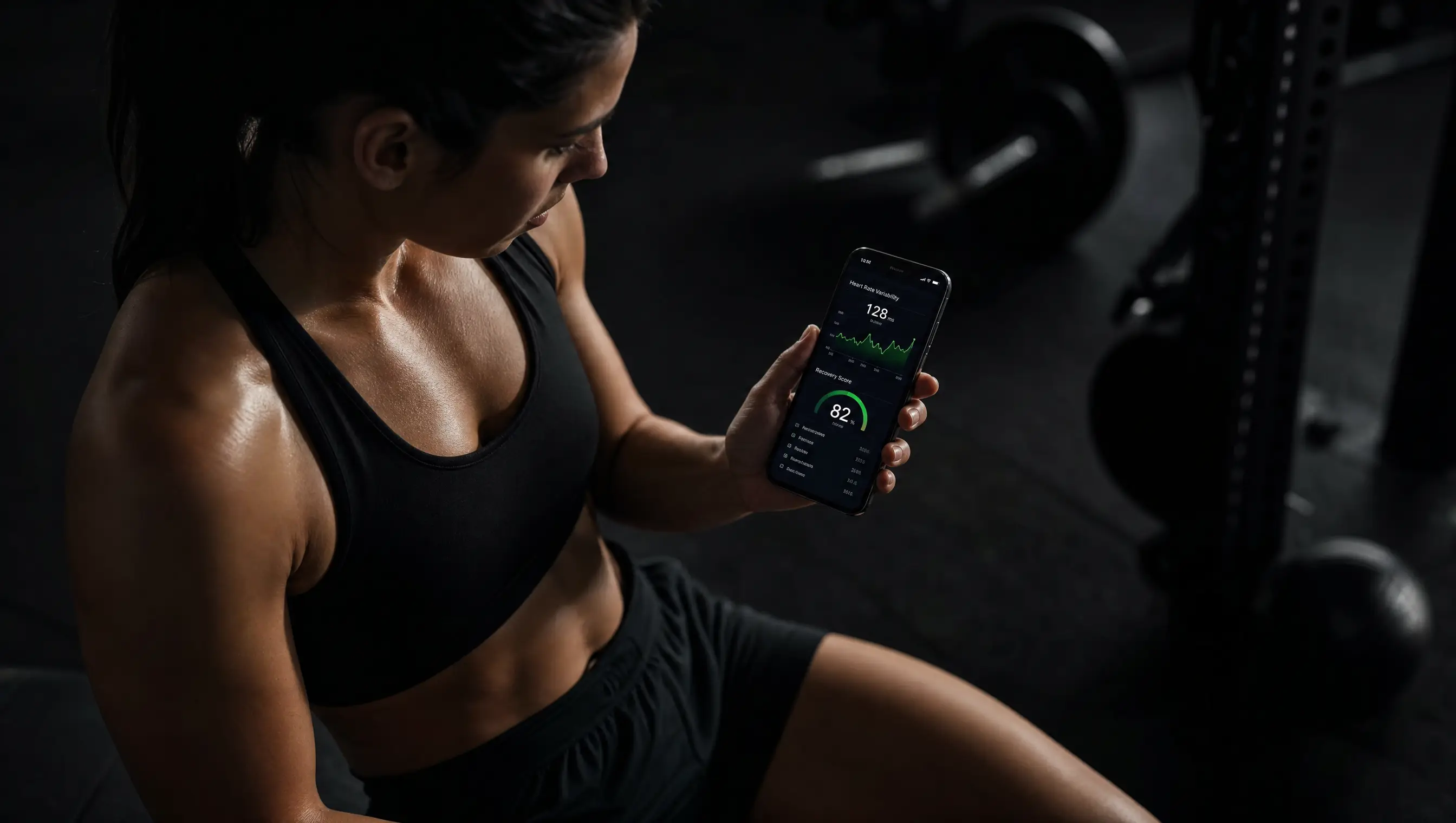
Here's the counter-intuitive part: more variation is good. A higher HRV means your nervous system is relaxed, adaptable, and ready to perform. A lower HRV means your body is in "stress" or "conserve" mode — fighting off fatigue, stress, or illness. It's a direct window into your autonomic nervous system, the part that runs recovery behind the scenes.
Why HRV Matters for Training
HRV is the closest thing we have to a daily "readiness" gauge. When you train hard, your HRV dips, then rebounds as you recover. Tracking that pattern tells you whether you've bounced back and are ready for another hard session — or whether you're still in the hole.
Research consistently shows that athletes who adjust their training based on HRV trends improve faster and get injured less than those grinding through a fixed plan. It's why HRV sits at the centre of nearly every modern recovery tool, and why it makes up the largest single input in many recovery scores.
What's a "Good" HRV?
This is the question everyone asks — and the answer surprises people: there's no universal good number. HRV is wildly individual. A healthy 25-year-old might sit at 90ms; a healthy 45-year-old might sit at 40ms. Both are perfectly fine. Comparing your HRV to someone else's is meaningless.
What matters is your own trend. After a week or two of measuring, you'll establish a personal baseline. From then on:
- Near or above your baseline → you're well recovered. Green light to train hard.
- Slightly below → train, but ease off the intensity.
- Well below for several days → your body needs recovery, not more stress.
Don't chase a single number. One low HRV reading means nothing on its own — it could just be a late night or a salty dinner. Look at the 7-day trend, not today's digit.
What Affects Your HRV
Once you start tracking, you'll quickly see your own patterns. The biggest levers:
- Sleep — the number one driver. Short or poor sleep tanks HRV the next morning.
- Alcohol — even a couple of drinks visibly lowers HRV overnight. It's one of the clearest effects you'll see.
- Stress — work pressure and life stress register here even when you "feel fine."
- Training load — a hard session lowers HRV temporarily; that's normal and expected.
- Illness — HRV often drops a day or two before you feel sick, an early warning to back off.
- Hydration & late meals — both nudge it down.
How to Measure HRV
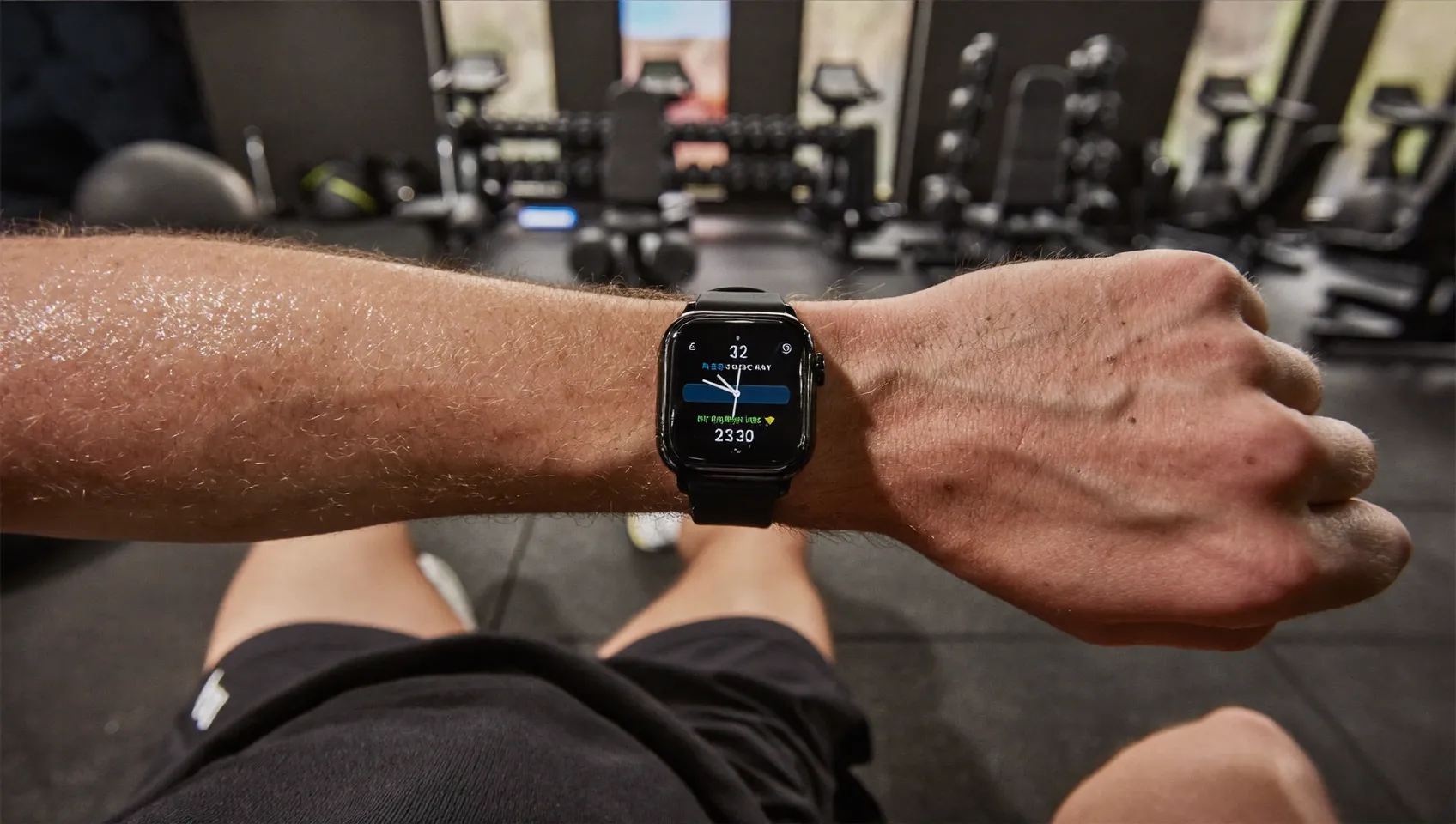
You don't need lab equipment — your wrist will do. Most wearables track HRV automatically:
- Apple Watch — logs HRV to Apple Health throughout the day and overnight.
- Oura Ring, Whoop, Garmin — all provide a morning HRV reading and trend.
- Chest straps — the most accurate, used with apps for a morning spot-check.
The golden rule is consistency: measure at the same time, ideally overnight or first thing in the morning before caffeine and movement. A reading taken right after coffee or a walk will be artificially different. On iPhone, HRV collects passively in Apple Health, and FitAI Coach reads it from there automatically each morning — no manual measuring required.
How to Actually Use HRV
Knowing your HRV is useless unless it changes a decision. Keep it simple:
- HRV near baseline? Train as planned — push hard if the rest of you feels good.
- HRV dipped a bit? Train, but reduce intensity or volume. Skip the PR attempt.
- HRV low for days? Prioritise sleep, hydration, and easy sessions until it recovers.
For the full framework on turning these signals into a daily decision, see how hard you should train today.
HRV Without the Homework
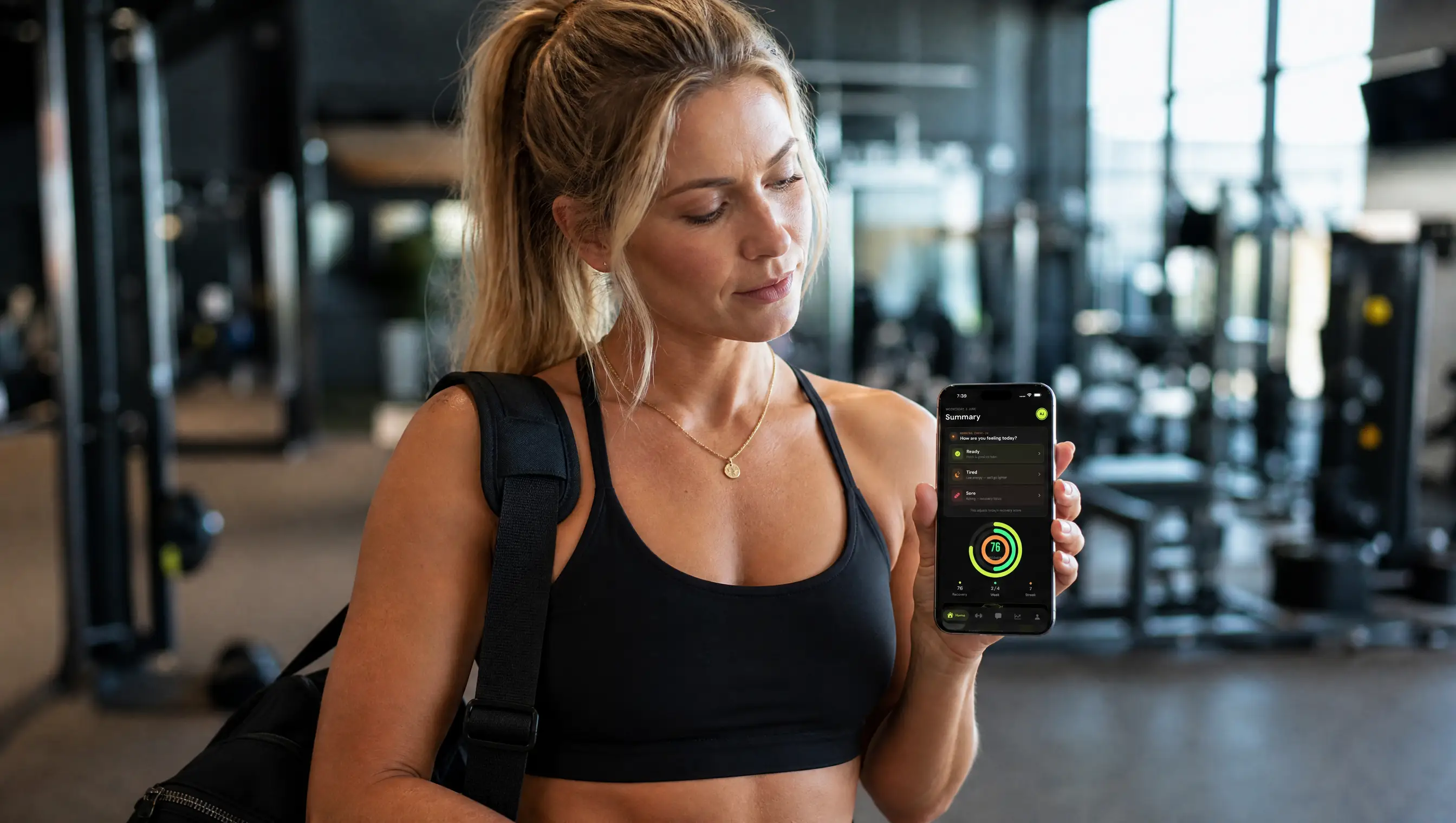
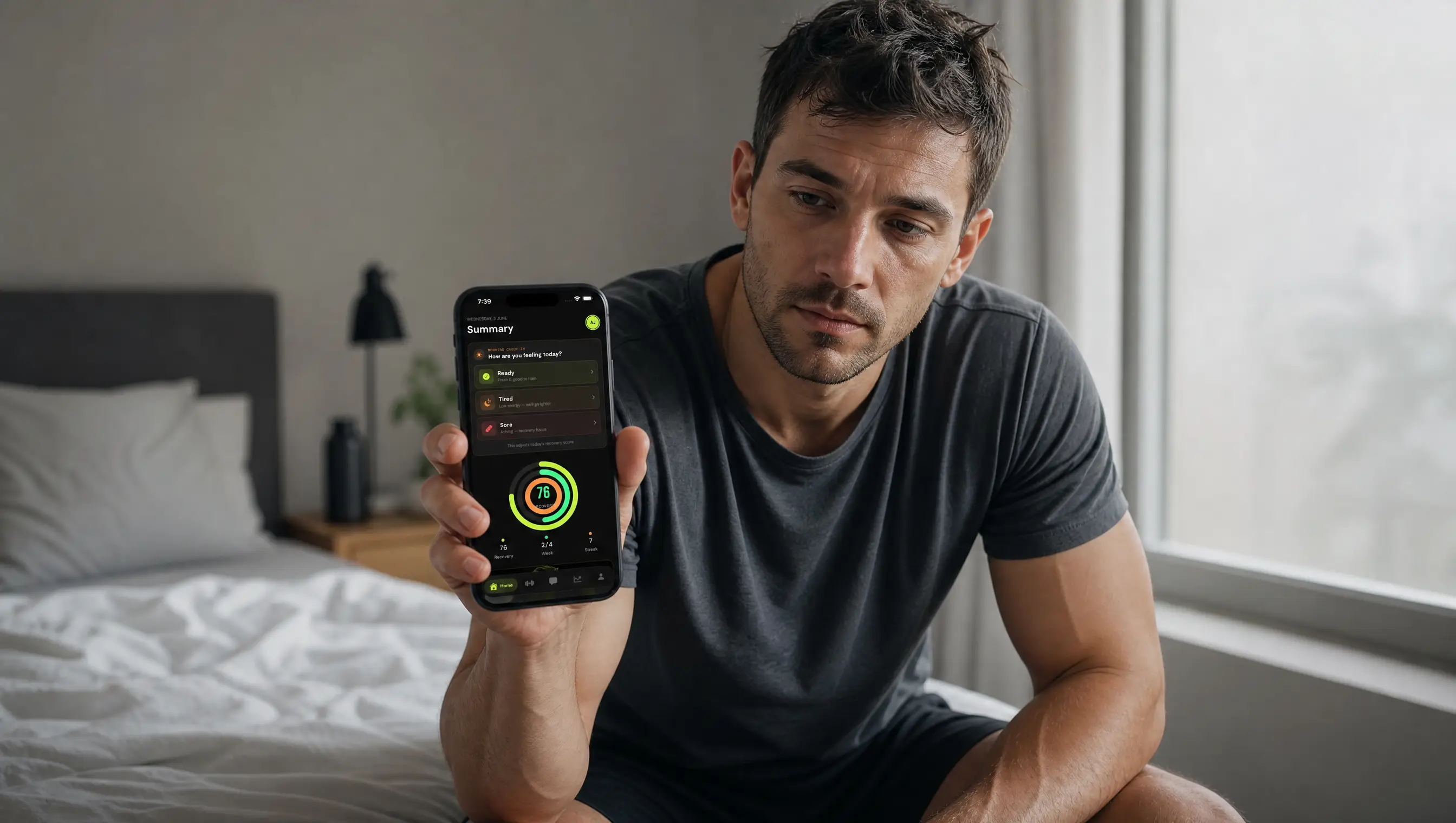
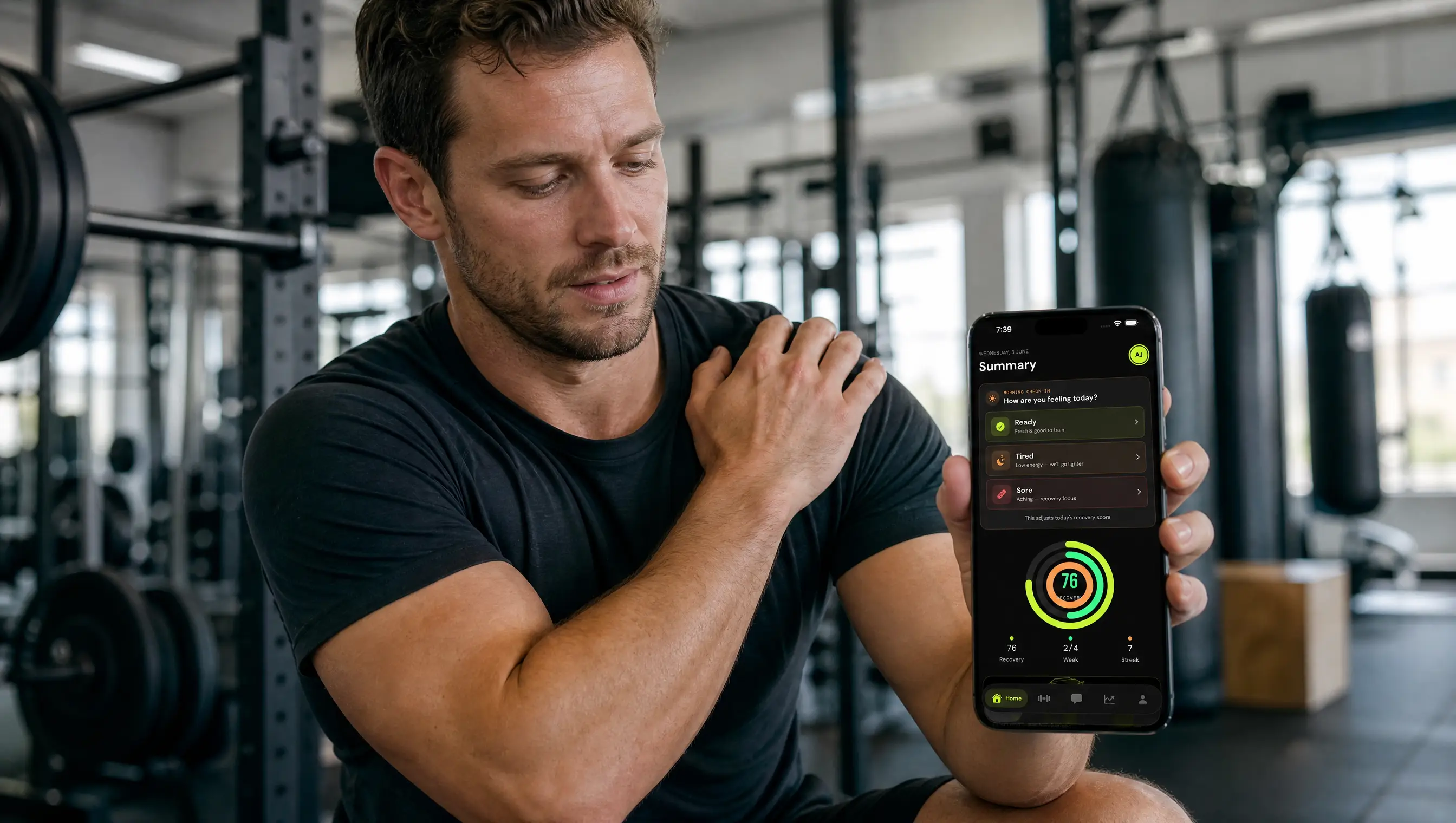
The catch with HRV is that staring at a raw millisecond number every morning gets old fast — and it's only one piece. Combined with your sleep and resting heart rate, it becomes far more useful. That's exactly what a recovery score does: it folds HRV, sleep, and heart rate into one simple 0–100 number and tells you what to do with it. In FitAI Coach, HRV is the biggest single input, so your daily score and workout recommendation already reflect it — you get the benefit of HRV-guided training without doing the maths.
Frequently Asked Questions
What is a good HRV?
There's no universal number — HRV varies hugely with age, genetics, and fitness, from the 20s to over 100ms. What matters is your own trend. Near or above your baseline is good; a clear drop below it signals stress.
This is not a nicety, it is the whole method. A 2026 review of HRV monitoring on mobile devices emphasises near-daily measurement over isolated readings, using weekly averages and how much your own numbers scatter — and notes that RMSSD, the metric nearly every app reports, reflects only one branch of the nervous system and is easily thrown off by outside factors.[1] Comparing your figure to a friend's tells you almost nothing.
The devices themselves add error on top of that. A meta-analysis of portable HRV devices found a small but real discrepancy against a clinical ECG, varying by device, by metric, and by how the reading was taken.[2] One more reason a fortnight of readings beats any single morning.
How do I measure my HRV?
Most wearables (Apple Watch, Oura, Whoop, Garmin, chest straps) track it automatically. For consistency, use an overnight or first-thing-morning reading at the same time daily. On iPhone, Apple Health logs it passively.
What lowers HRV?
Poor sleep, alcohol, stress, dehydration, illness, and hard training all lower HRV temporarily. A single low reading is normal; a sustained drop means you need more recovery.
Should I train if my HRV is low?
One low day isn't a reason to skip training — just go lighter and skip max efforts. If it stays low for days, prioritise sleep and easy sessions until it returns toward baseline. And keep expectations realistic about what training to HRV delivers: a meta-analysis of 8 studies found HRV-guided endurance training produced a medium benefit for submaximal physiological markers but small, non-significant effects on performance, with the clearest advantage being fewer people who got nothing at all out of the block.[3]
HRV-Guided Training, Automatically
FitAI Coach reads your HRV from Apple Health and turns it into a daily recovery score and workout plan. Free to download.

References
Every factual claim above links to the study behind it. Where the evidence is limited or contested, that is stated in the text rather than smoothed over.
- Esco MR, Fields AD, Mohammadnabi MA, Kliszczewicz BM. Monitoring training adaptation and recovery status in athletes using heart rate variability via mobile devices: a narrative review. Sensors (Basel). 2026;26(1):3. PubMed
- Dobbs WC, Fedewa MV, MacDonald HV, et al. The accuracy of acquiring heart rate variability from portable devices: a systematic review and meta-analysis. Sports Med. 2019;49(3):417–435. PubMed
- Düking P, Zinner C, Trabelsi K, et al. Monitoring and adapting endurance training on the basis of heart rate variability monitored by wearable technologies: a systematic review with meta-analysis. J Sci Med Sport. 2021;24(11):1180–1192. PubMed
FitAI Coach is a fitness app, not a medical device, and nothing here diagnoses any condition. If symptoms persist or something feels wrong, see a doctor.