Should You Work Out When Sore? When to Push and When to Rest
Short answer: if the soreness is mild, yes — you can usually train, and light movement may even help. But "sore" isn't one thing. The trick is knowing the difference between normal muscle soreness, the kind you should train around, and the kind that means stop. Here's how to decide.
What Soreness Actually Is
That ache you feel a day or two after a tough session has a name: delayed onset muscle soreness, or DOMS. A review in Sportverletzung · Sportschaden describes it as a form of ultrastructural muscle injury brought on by eccentric or unfamiliar exercise — lowering a weight under control, or simply doing something your body hasn't done in a while — with reduced force capacity and painful restriction of movement among its clinical signs.[1] Note what is not in that description: lactic acid, which clears within about an hour of finishing and has nothing to do with soreness two days later.
There is a reassuring corollary. Do the same session again and it will hurt considerably less — a well-documented phenomenon called the repeated bout effect, in which a single bout of unfamiliar exercise protects the muscle against damage from the next one through a combination of neural, structural and biochemical adaptations.[2] Soreness after a new programme isn't a sign you overdid it. It is mostly a sign the exercise was new.
DOMS typically shows up 12–24 hours after training, peaks around 24–48 hours, and fades within a few days. It is not a sign of damage you need to worry about — it's part of how muscles adapt and get stronger. It's also not a reliable measure of how good your workout was. Soreness mostly tells you that you did something new, not necessarily something productive.
Is It Safe to Work Out When Sore?
For mild to moderate DOMS, yes. In fact, gentle movement is one of the best things for it — easy cardio, mobility work, or training a different muscle group increases blood flow to the area and temporarily eases the ache.
What you want to avoid is hammering the same muscle group with another hard, heavy session while it's still recovering. That doesn't make you tougher; it just slows the repair and raises your injury risk. Sore quads? Don't max out squats today — but an upper-body session or an easy walk is completely fine.
The Sore-Day Decision Guide
Match how you feel to a row. Most of the time you'll know in a few seconds.
| How sore are you? | Verdict | What to do |
|---|---|---|
| Mild — a bit stiff, fades once you warm up, no sharp pain | Train | Go ahead. Train as planned, or shift load to a different muscle group. A proper warm-up will make it disappear. |
| Moderate — clearly sore, full range of motion is uncomfortable | Train around it | Work a different body part, or go lighter on the sore muscle. Add mobility and easy cardio. Skip max efforts. |
| Severe — sore 3+ days, hard to walk/sit, disturbs sleep | Rest or recover | Active recovery only — walk, stretch, foam roll. Give the muscle another day. This is normal after a big new stimulus. |
Key rule: Soreness affects how and what you train far more often than whether you train at all. On most sore days the answer isn't "rest entirely" — it's "train something else, or train lighter."
Soreness vs Injury — Don't Confuse Them
This is the distinction that actually matters. Training through soreness is fine; training through an injury is how small problems become big ones.
- Soreness: dull, spread across the muscle belly, usually both sides evenly, peaks 24–48 hours after training, eases with light movement.
- Injury: sharp or stabbing, localised to one spot or a joint, often just one side, and gets worse with specific movements rather than better as you warm up.
If it's sharp, joint-related, or one-sided — stop, and don't "push through" it. Rest it or get it looked at. When in doubt, treat it as an injury, not soreness.
How to Train Smart on a Sore Day
- Warm up properly. 5–10 minutes of easy movement before lifting. Mild soreness often vanishes once blood is flowing.
- Split your training. Sore legs? Train upper body. Sore chest? Do legs or a mobility session. This is why structured splits work so well.
- Drop the load, keep the movement. Lighter weight with full range of motion still drives recovery and keeps your habit intact.
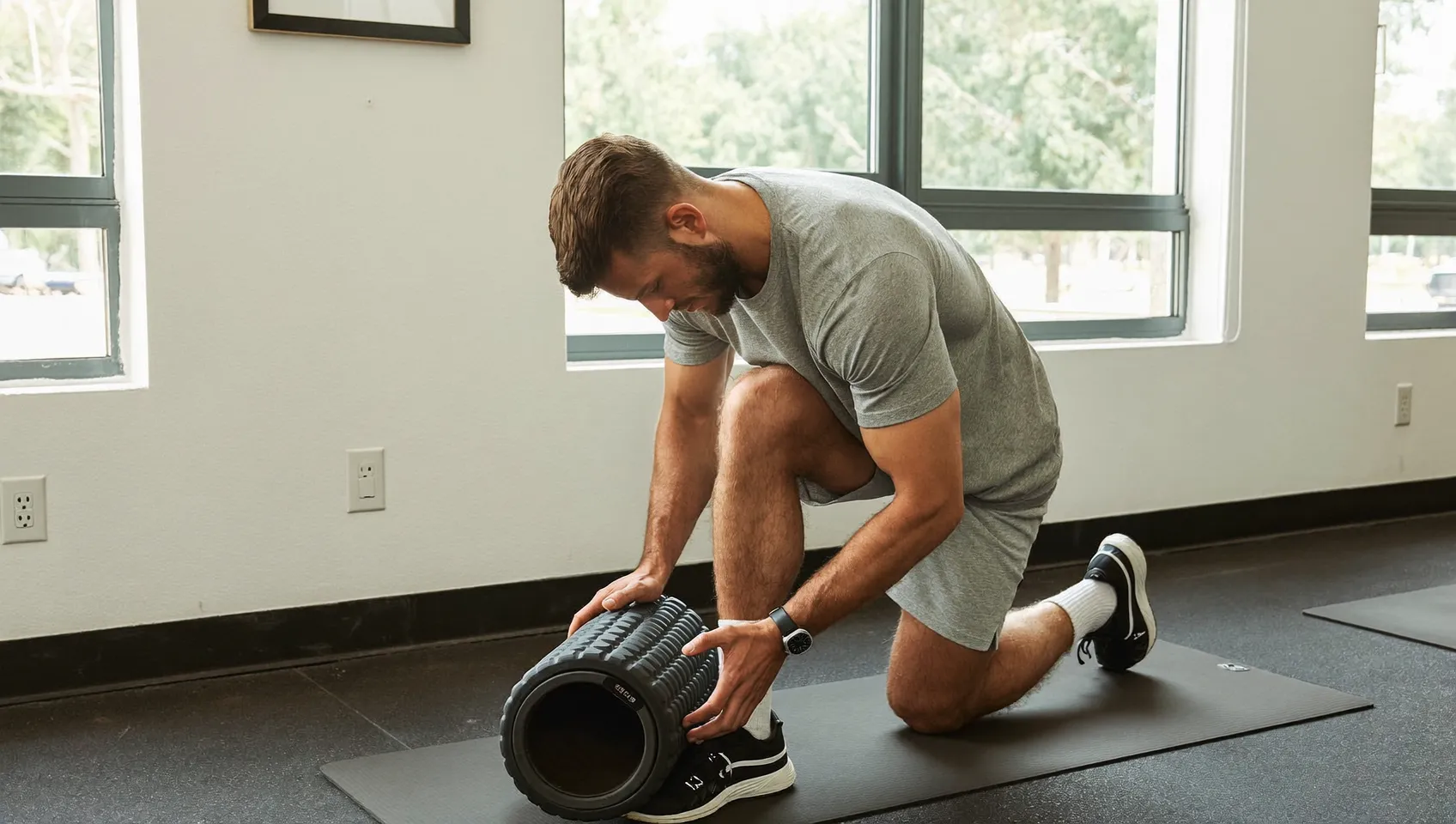
- Use it as active recovery. Walking, cycling, swimming, and mobility all reduce soreness better than sitting still.
How to Be Less Sore in the First Place
You can't eliminate soreness, but you can keep it from wrecking your week:
- Progress gradually. Big jumps in weight or volume cause the worst DOMS. Apply sensible progression instead.
- Prioritise sleep. Most muscle repair happens overnight. Poor sleep means more soreness and slower recovery.
- Eat enough protein. Aim for roughly 1.6–2.2g per kg of bodyweight per day to support repair.
- Stay consistent. The "repeated bout effect" means once your body is used to a movement, the same workout causes far less soreness next time.
Let Your Recovery Score Make the Call
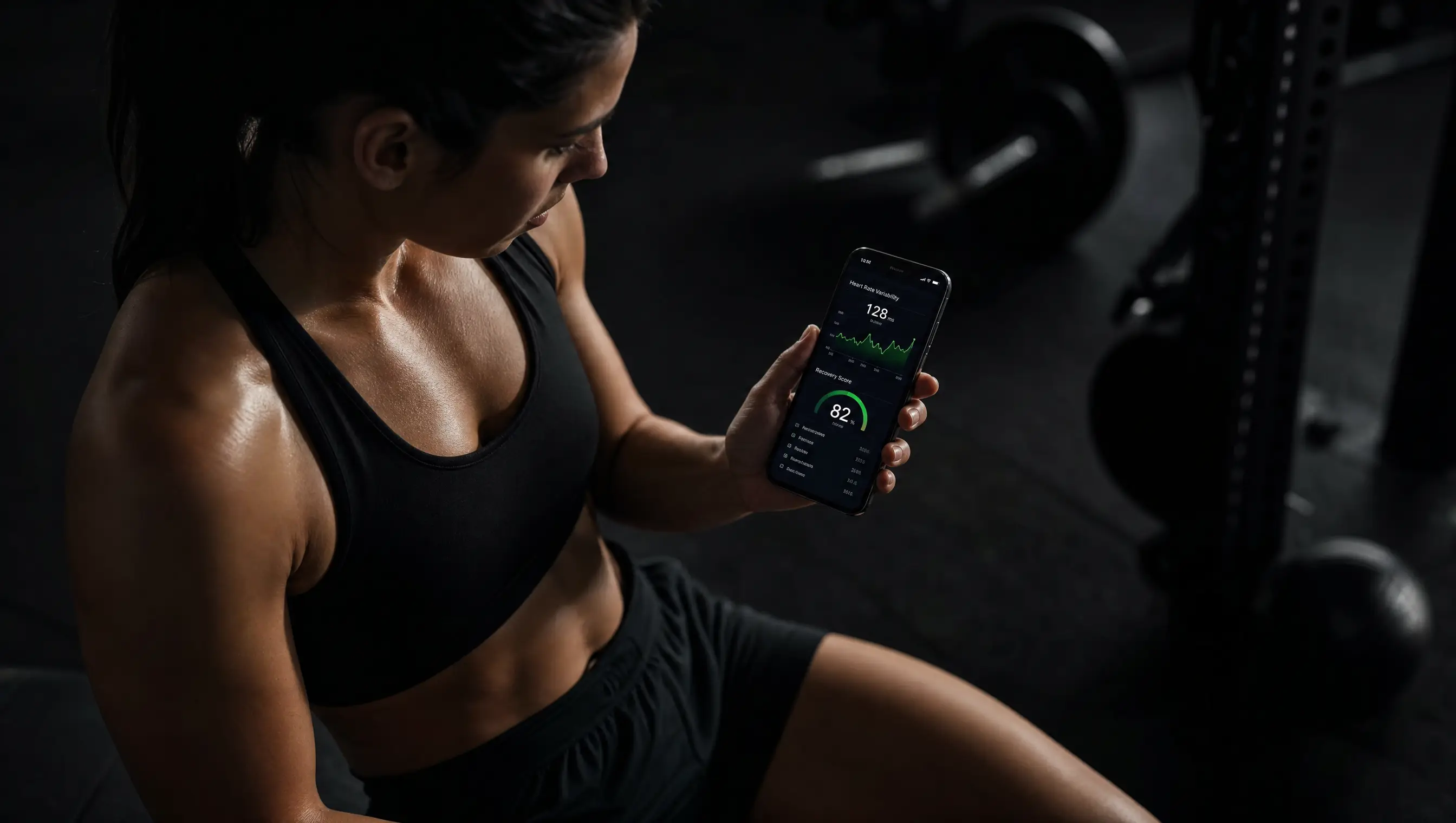
Soreness is just one signal. Combined with your sleep, heart rate, and HRV, it paints a fuller picture of how recovered you really are — which is exactly what a recovery score does.
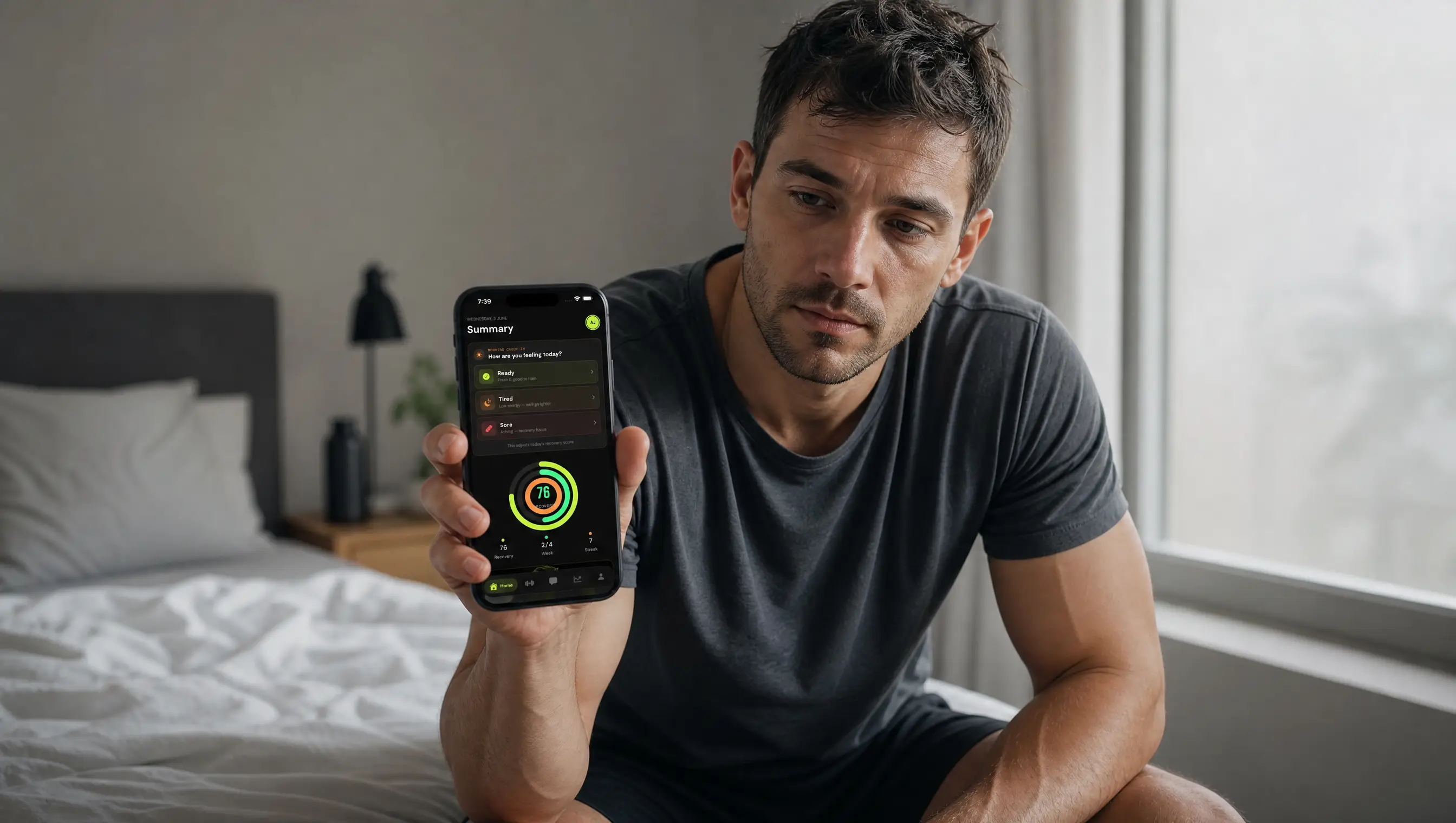
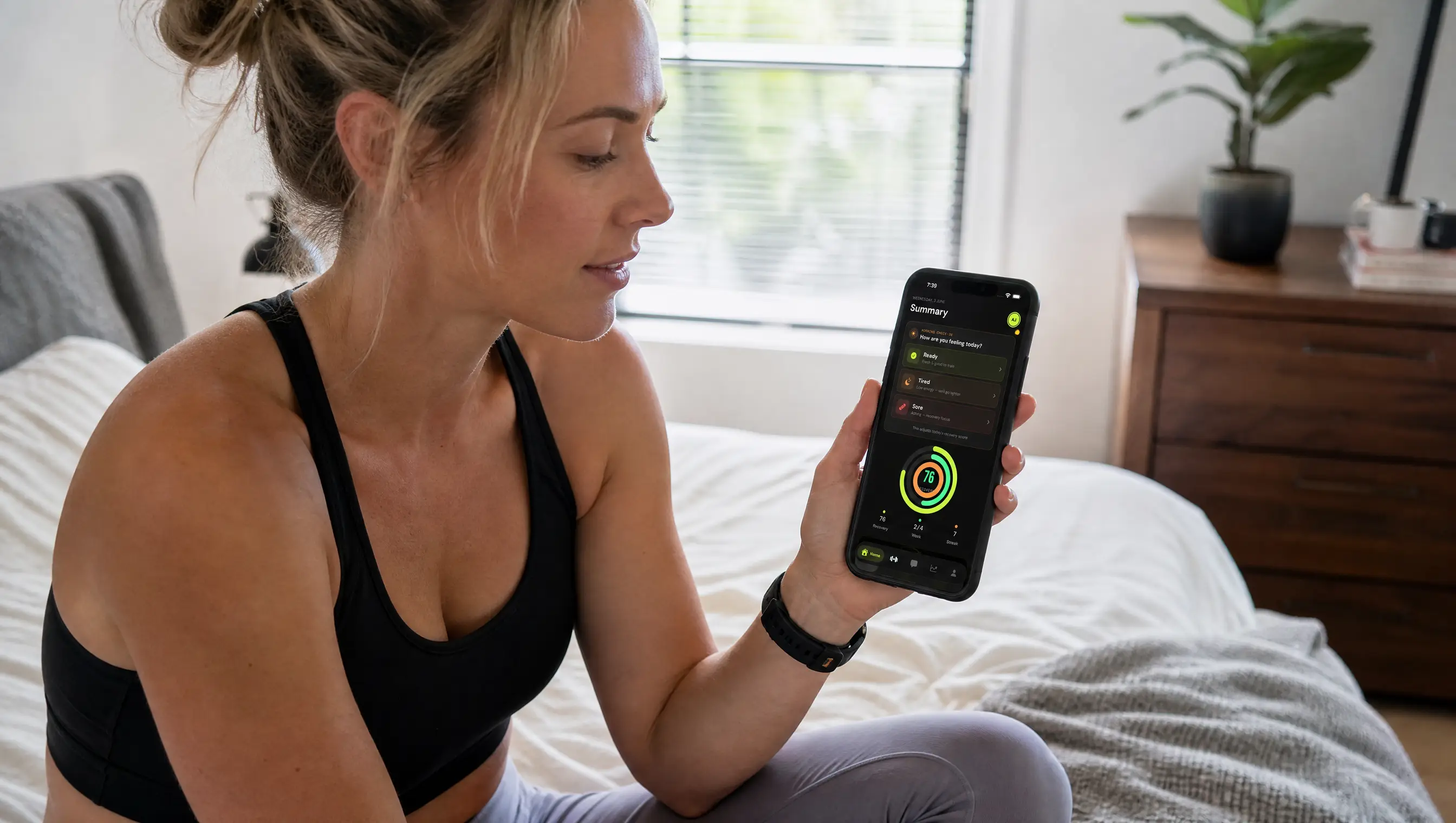
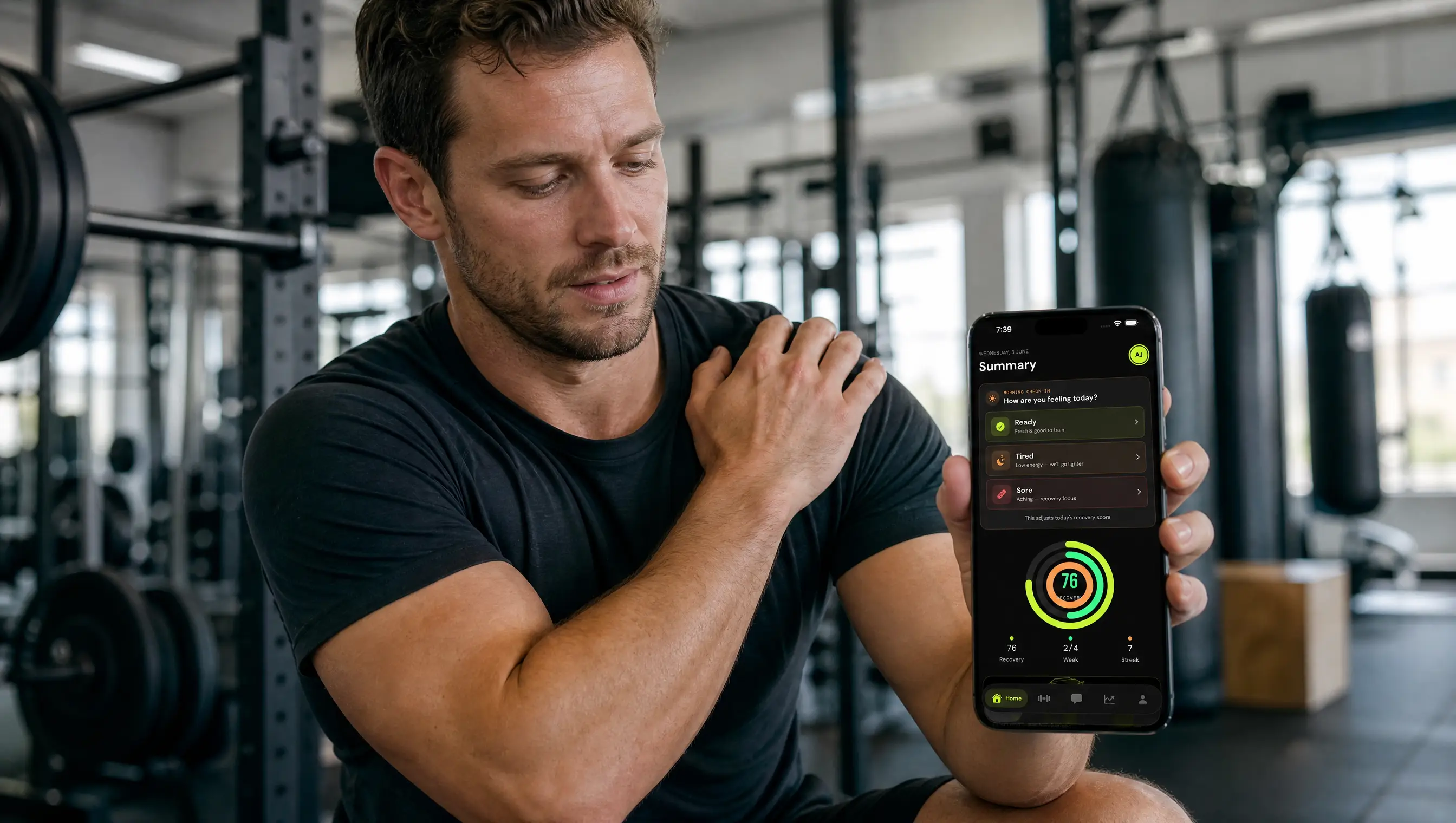
In FitAI Coach, a 3-second morning check-in lets you tap Ready, Tired, or Sore — and tapping "Sore" automatically lowers your recovery score for the day, so your AI coach steers you toward lighter work or a different muscle group instead of a session you'll regret. If you want the bigger framework behind this, read how hard you should train today.
Frequently Asked Questions
Is it OK to work out when your muscles are sore?
Yes, in most cases. Mild to moderate DOMS is normal and safe to train through — gentle movement helps it fade. Avoid hard, heavy training of the same muscle until it settles, and stop if the pain is sharp or joint-related.
Should I rest or work out if I'm really sore?
If you're severely sore — struggling on stairs, sore for 3+ days, or it's affecting sleep — take a rest or active-recovery day. Light cardio and mobility help more than another hard session.
How do I know if it's soreness or an injury?
Soreness is dull, spread out, both sides, and eases with movement. Injury is sharp, localised or joint-based, often one-sided, and worsens with specific movements. Sharp or joint pain means stop.
Does working out when sore help it go away faster?
Light activity can. Gentle movement and easy cardio boost circulation and ease the ache. Another maximal session on the same muscle can prolong it.
Stop Guessing on Sore Days
FitAI Coach turns your soreness, sleep, and heart rate into one clear recovery score — and adjusts today's workout for you. Free to download.

References
Every factual claim above links to the study behind it. Where the evidence is limited or contested, that is stated in the text rather than smoothed over.
- Hotfiel T, Freiwald J, Hoppe MW, et al. Advances in delayed-onset muscle soreness (DOMS): part I: pathogenesis and diagnostics. Sportverletz Sportschaden. 2018;32(4):243–250. PubMed
- Hyldahl RD, Chen TC, Nosaka K. Mechanisms and mediators of the skeletal muscle repeated bout effect. Exerc Sport Sci Rev. 2017;45(1):24–33. PubMed
FitAI Coach is a fitness app, not a medical device, and nothing here diagnoses any condition. If symptoms persist or something feels wrong, see a doctor.