Signs You Need a Rest Day (and How Many Per Week)
Muscle isn't built in the gym — it's built while you recover. So the signs you need a rest day are worth taking seriously: persistent fatigue, a rising resting heart rate, restless sleep, a flat mood, and lifts that suddenly feel heavier than they should. Here's how to read those signals, and roughly how many rest days per week most people actually need.
Why Rest Days Matter More Than You Think
Training is a stimulus, not the result. When you lift, you create small amounts of fatigue and micro-damage. The actual adaptation — bigger, stronger muscles and a fitter cardiovascular system — happens afterwards, while you rest, sleep, and eat. Skip the recovery and you skip the gains.
The joint consensus statement of the European College of Sport Science and the American College of Sports Medicine frames it the same way: the problem is never overload by itself, but excessive overload combined with inadequate recovery. It also draws a distinction worth knowing — a short-term dip in performance that you bounce back from stronger is functional overreaching, a normal part of training, and quite different from the prolonged maladaptation of overtraining syndrome.[1]
Push hard every single day and fatigue stacks up faster than your body can clear it. Progress stalls, then reverses. You feel constantly tired, your sleep gets worse, niggles turn into injuries, and motivation drains away. That slide has a name — overtraining — and a well-placed rest day is the simplest way to avoid it.
6 Signs You Need a Rest Day
No single signal is conclusive — everyone has the occasional off morning. But when two or more of these show up together, your body is asking for a break.
1. Fatigue that sleep doesn't fix
Normal tiredness lifts after a good night's sleep. Recovery debt doesn't. If you're waking up just as drained as you went to bed — for several days running — that's accumulated fatigue, and another hard session will only deepen it.
2. An elevated resting heart rate
Your resting heart rate (best measured first thing in the morning) is a quiet stress gauge. When it sits 5–10 beats per minute above your normal for a day or two, it often means your body is still working hard to recover from previous training, illness, or stress.
3. A drop in HRV
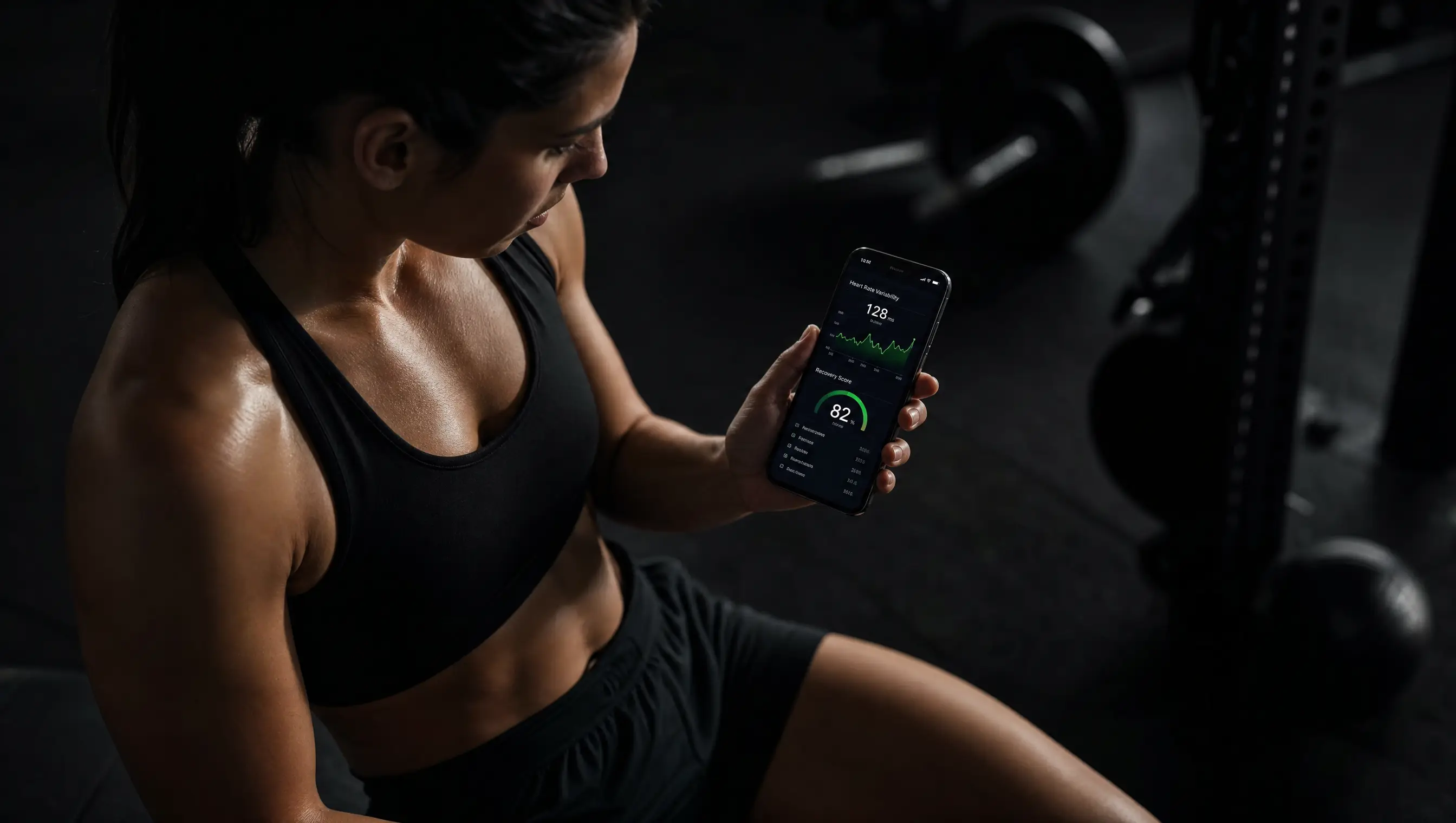
Heart rate variability — the tiny timing differences between heartbeats — reflects how recovered your nervous system is. A noticeable dip below your personal baseline is one of the earliest, most reliable signs you're under-recovered. (New to this? See our HRV for beginners guide.)
4. Poor or restless sleep
Overreaching disrupts sleep — you struggle to drop off, wake through the night, or feel unrefreshed despite enough hours in bed. That matters in both directions: a systematic review of 17 studies found a single bad night has little measurable effect on strength, but several consecutive restricted nights reduce force output in compound lifts such as the squat, bench and deadlift, while single-joint movements are largely unaffected.[2] Bad sleep and hard training is a loop worth breaking with a rest day.
5. Low mood, irritability, or no motivation
Recovery is as much mental as physical. Persistent irritability, a flat mood, or dreading a workout you'd normally enjoy are classic signs of an over-stressed system. If the thought of training fills you with dread rather than the usual mild reluctance, listen to it.
6. Stalled or declining performance
This is the one lifters notice last and should notice first. Weights that flew up last week suddenly grind. Your usual paces feel harder at the same effort. When performance dips despite consistent training, you're not under-trained — you're under-recovered.
Rule of thumb: one off day is noise. Two or more of these signs stacking up — or any one of them lasting several days — is the signal. Take the rest day; you'll come back stronger, not weaker.

How Many Rest Days Per Week Do You Need?
There's no universal number, but these ranges fit most people. Adjust based on how you actually recover, not on what your training program looks like on paper.
| Who you are | Rest days / week | Notes |
|---|---|---|
| Beginner / returning after a break | 2–3 | Your body isn't yet used to the load. More recovery now means faster, injury-free progress later. |
| Intermediate, full-body or upper/lower split | 2 | Two rest (or active-recovery) days lets each muscle group recover between sessions. |
| Experienced, body-part split, training hard | 1–2 | You can train more often because each muscle still gets several days off within the split. |
| Older, high-stress, or poor sleep right now | 3+ | Life stress and recovery share the same budget. When sleep and stress are bad, add rest. |
Notice the pattern: the harder and more often you train, the more deliberate your recovery has to be. Rest days aren't time off from progress — they are the progress.
Rest Day vs Active Recovery
A "rest day" doesn't have to mean lying on the couch. There are two useful versions:
- Active recovery — light, easy movement that boosts blood flow without adding training stress: a walk, easy cycle, swim, yoga, or mobility work. For most rest days, this beats doing nothing because it helps you recover faster.
- Full rest — genuine downtime, reserved for when you're truly run-down, ill, or several signs above are flashing at once. Sometimes the most productive thing you can do for your training is nothing at all.
When you're not sure which you need, default to active recovery on a light day and full rest only when you feel genuinely depleted. On planned rest days, a little mobility work on sore muscles often does more good than another hard session.
Stop Guessing — Let Your Recovery Score Decide
The hardest part of all this is honesty. On any given morning it's tough to tell "I genuinely need rest" from "I just don't feel like training." That's exactly the problem a recovery score solves — it turns those scattered signals into one objective number.
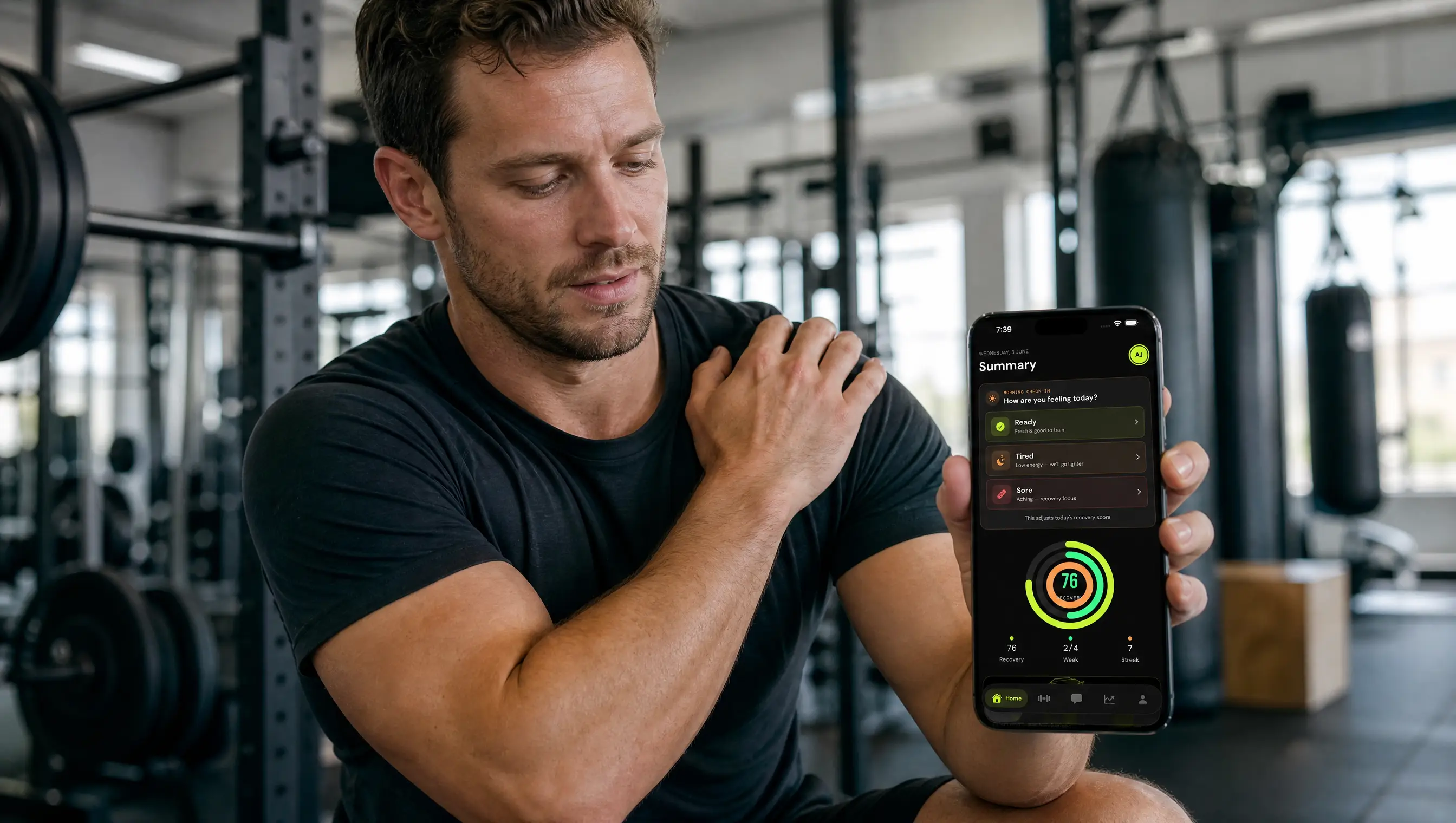
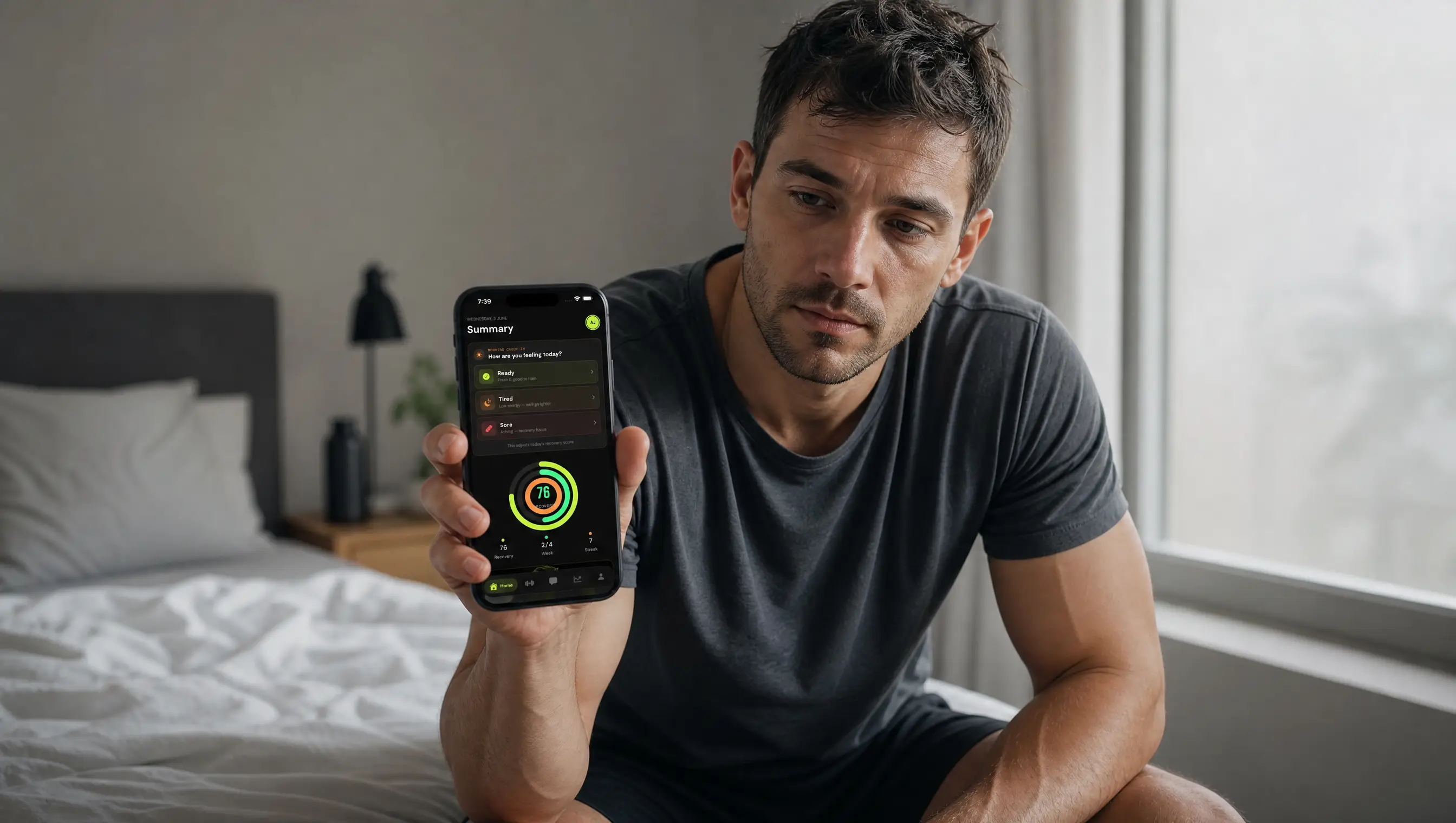
FitAI Coach reads your sleep, resting heart rate, and HRV from Apple Health, adds a 3-second morning check-in (Ready, Tired, or Sore), and produces a daily recovery score. When the number is low, your AI coach automatically nudges you toward a lighter session or a rest day — and when it's high, it tells you to push. For the full framework behind training by readiness, read how hard you should train today.
Frequently Asked Questions
How many rest days per week do I need?
Most people training with weights do well with 1–3 rest days per week. Beginners and full-body trainees usually need at least 2; experienced lifters on a body-part split can often manage with 1–2. Let your recovery signals, not a fixed rule, make the final call.
Worth adding, because the internet rarely does: the case for a scheduled full week off is weaker than it is usually presented. A controlled trial that inserted a one-week complete-rest deload into a nine-week programme found no muscle-size advantage, and slightly less strength gained than in the group that simply kept training.[3] That is one study, so don't over-read it — but "everyone must deload every 4–6 weeks or stall" is not something the evidence establishes. Individual rest days, taken when your signals call for them, are the better-supported habit.
What are the signs you need a rest day?
Persistent fatigue that sleep doesn't fix, an elevated resting heart rate, a drop in HRV, poor sleep, low mood or irritability, lingering soreness, and stalled performance. One signal alone isn't conclusive; two or more together usually means rest or train very lightly.
Is it bad to not take rest days?
Yes. Training hard every day without adequate rest leads to accumulated fatigue, stalled progress, poor sleep, higher injury risk, and eventually overtraining. Muscle is built during recovery, so skipping rest days slows results rather than speeding them up.
Should I do nothing on a rest day?
Not necessarily. Active recovery — walking, easy cycling, swimming, stretching, mobility — often helps you recover faster than complete inactivity. Reserve total rest for days when you feel genuinely run-down.
Know Exactly When to Rest
FitAI Coach turns your sleep, heart rate, and HRV into one clear recovery score — and tells you when to train hard and when to back off. Free to download.

References
Every factual claim above links to the study behind it. Where the evidence is limited or contested, that is stated in the text rather than smoothed over.
- Meeusen R, Duclos M, Foster C, et al. Prevention, diagnosis, and treatment of the overtraining syndrome: joint consensus statement of the European College of Sport Science and the American College of Sports Medicine. Med Sci Sports Exerc. 2013;45(1):186–205. PubMed
- Knowles OE, Drinkwater EJ, Urwin CS, Lamon S, Aisbett B. Inadequate sleep and muscle strength: implications for resistance training. J Sci Med Sport. 2018;21(9):959–968. PubMed
- Coleman M, Burke R, Augustin F, et al. Gaining more from doing less? The effects of a one-week deload period during supervised resistance training on muscular adaptations. PeerJ. 2024;12:e16777. PMC
FitAI Coach is a fitness app, not a medical device, and nothing here diagnoses any condition. If symptoms persist or something feels wrong, see a doctor.