What Is a Recovery Score — and Why It Should Drive Your Training
Your body doesn't care about your training schedule. A recovery score turns invisible signals — sleep quality, resting heart rate, heart rate variability — into a single daily number that tells you exactly how hard to push today.
The Problem with Fixed Training Schedules
Most workout programmes are written as if your body is a machine that responds identically every day. Monday is chest day. Wednesday is legs. Saturday is long run. No exceptions.
But your body is not a machine. A systematic review of 17 studies found that a single bad night has little measurable effect on strength — but several consecutive nights of restricted sleep reduce force output in compound lifts like the squat, bench and deadlift, while leaving single-joint movements largely unaffected.[3] Those compound lifts are exactly the ones most people judge their progress by. Training hard through a bad stretch doesn't build fitness so much as delay it.
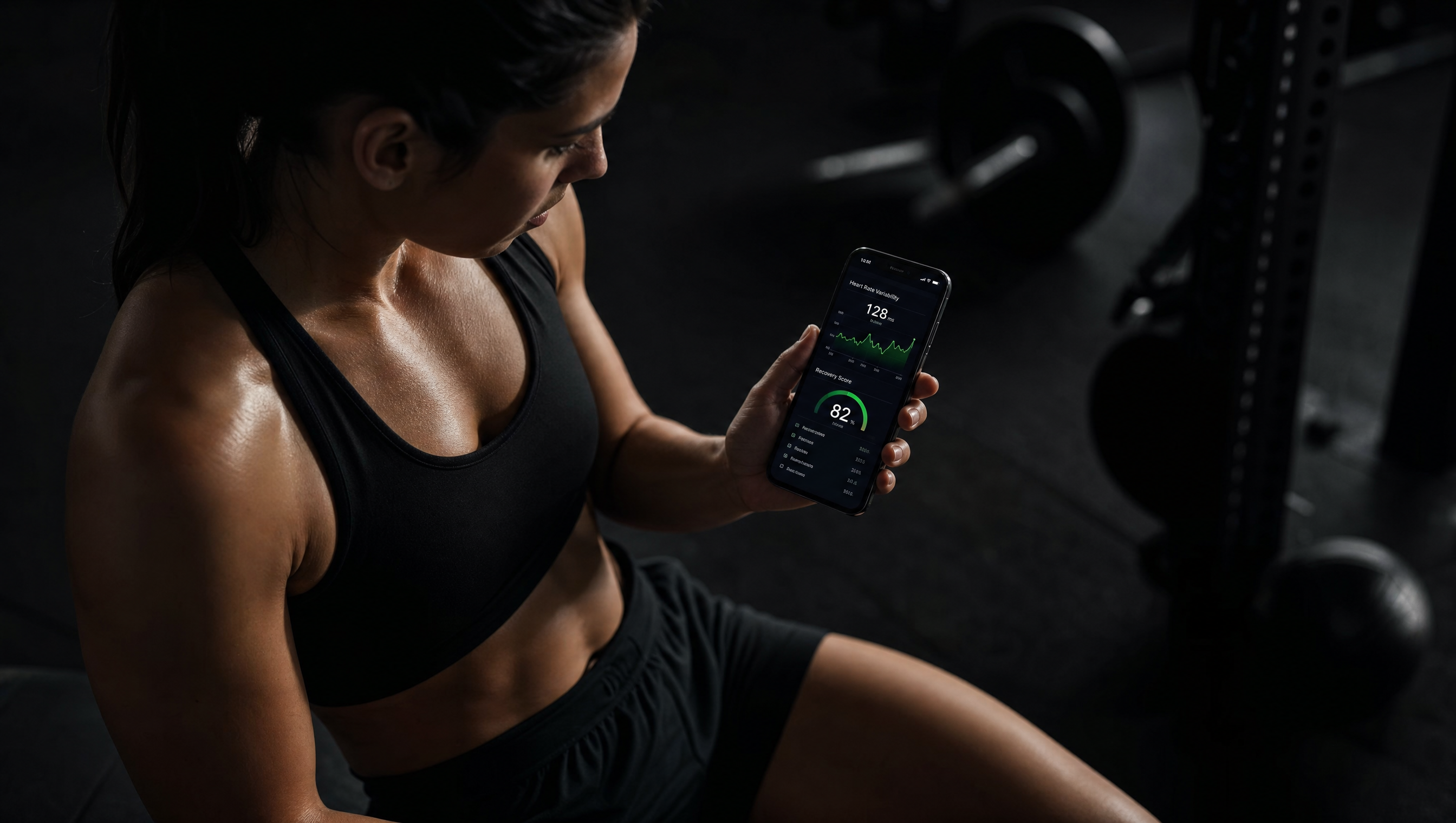
A recovery score solves this by giving you an objective daily readiness rating before you lace up your shoes.
What a Recovery Score Actually Measures
A recovery score aggregates several physiological signals into a single 0–100 number. The most reliable inputs are:
- Heart Rate Variability (HRV) — the millisecond variation between heartbeats. Higher HRV = more recovered. It's the single strongest predictor of training readiness.
- Resting Heart Rate (RHR) — a resting HR 5+ bpm above your baseline is a reliable sign your body is under stress.
- Sleep duration and quality — total sleep time, sleep efficiency, and the proportion of deep sleep all factor in.
- Previous day's training load — how hard you trained yesterday affects today's capacity.
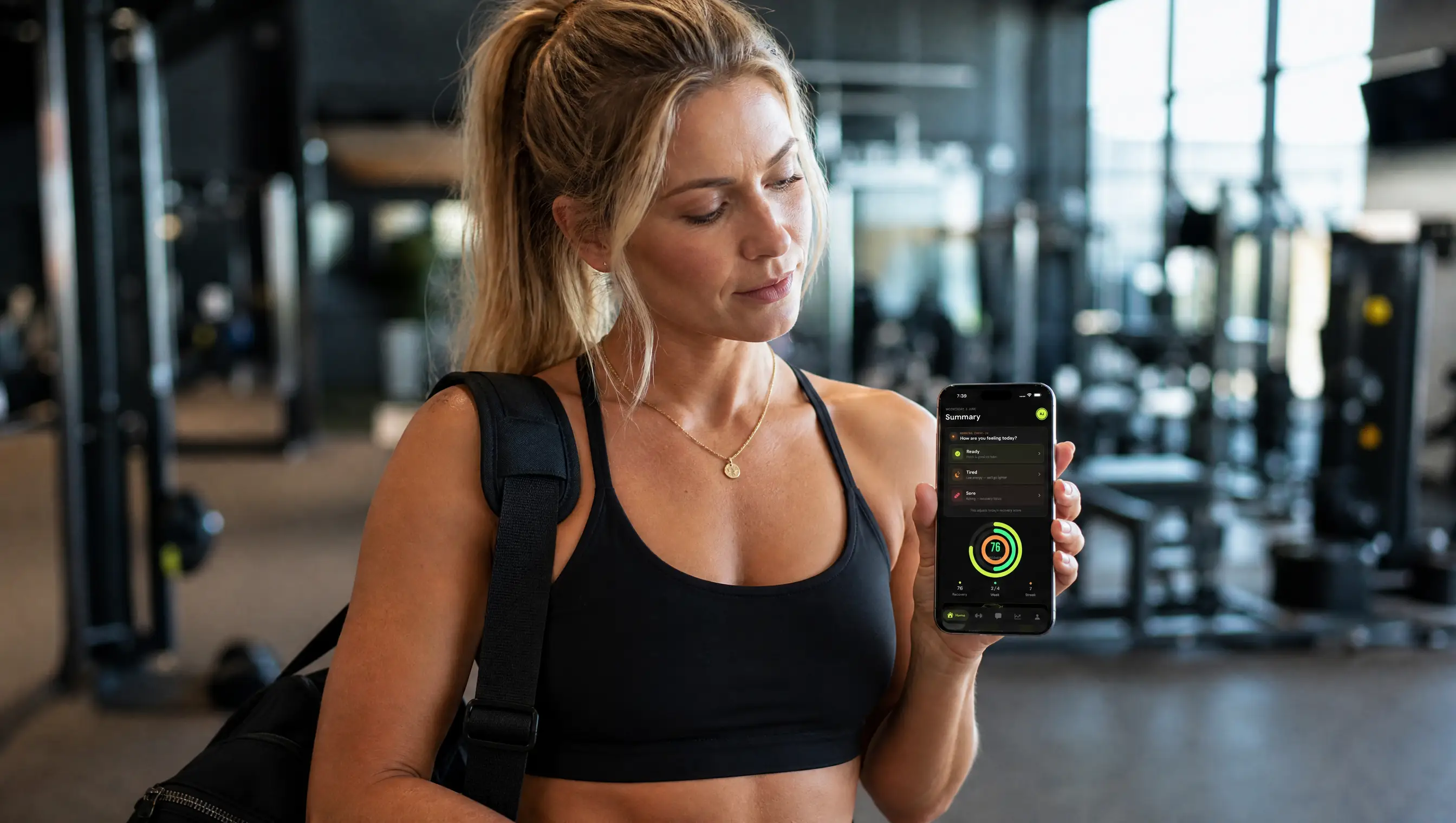
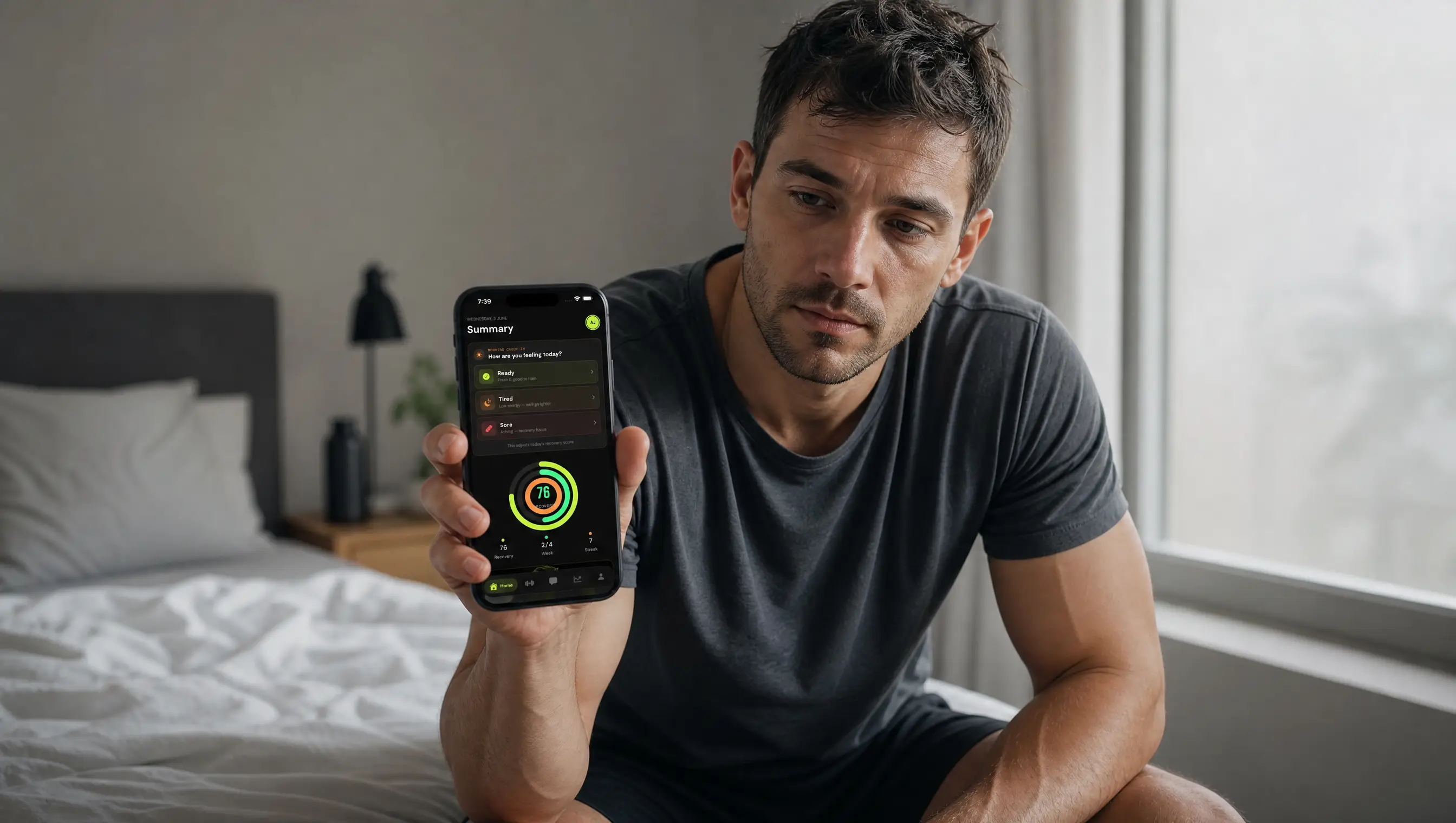
FitAI Coach reads these signals automatically from Apple Health on your iPhone every morning and generates your score before you open the app.
How to Read Your Score
FitAI Coach rule: If your recovery score is below 40, the AI will never suggest a hard training session. It will redirect you to active recovery, mobility work, or a full rest day — regardless of what your programme says.
HRV: The Most Important Signal You're Not Tracking
Heart rate variability sounds complex, but the concept is simple: a healthy, well-recovered heart does not beat like a metronome. The gaps between beats vary slightly — and that variation is a sign your autonomic nervous system is functioning well.
When you're stressed, under-recovered, or getting sick, your HRV drops. Your heart starts beating more mechanically. That's your nervous system telling you it's in conservation mode — not growth mode.
So what does adjusting training to HRV actually buy you? Less than the fitness industry tends to claim. The most complete answer we have is a 2021 systematic review and meta-analysis of 8 studies and 198 participants, which compared HRV-guided endurance training against a fixed, predefined plan. It found a medium-sized benefit for submaximal physiological markers — but the effects on actual performance and VO2peak were small and not statistically significant.[1]
One finding in that review is more interesting than the headline: HRV-guided groups had fewer non-responders — fewer people who trained for weeks and got nothing out of it.[1] That is a more modest and more honest reason to pay attention to recovery data than "twice the gains." It is also worth knowing that this evidence comes from endurance training; equivalent trials in strength training are thinner.
A 2026 review of HRV monitoring on mobile devices makes two points worth carrying into any app that uses this data. First, near-daily measurement beats isolated readings — weekly averages and how much your own numbers scatter tell you more than any single morning. Second, RMSSD, the standard HRV measure and the one most apps use, has real limitations: it reflects only one branch of the nervous system and is easily disturbed by outside factors.[2] That is why FitAI reads your trend rather than yesterday's number, and pairs it with a morning check-in instead of treating the reading as a verdict.
Why Most People Ignore Recovery
Recovery feels passive. It doesn't look like progress. You can't post a rest day on social media the same way you post a new personal best.
But recovery is where adaptation actually happens. Training is the stimulus. Sleep and rest are where your muscles rebuild, your nervous system resets, and your cardiovascular system strengthens. Skipping recovery doesn't make you tougher — it makes you slower to progress and faster to break down.
The athletes who sustain high performance for years — not months — are the ones who treat recovery as seriously as training.

How FitAI Coach Uses Your Recovery Score
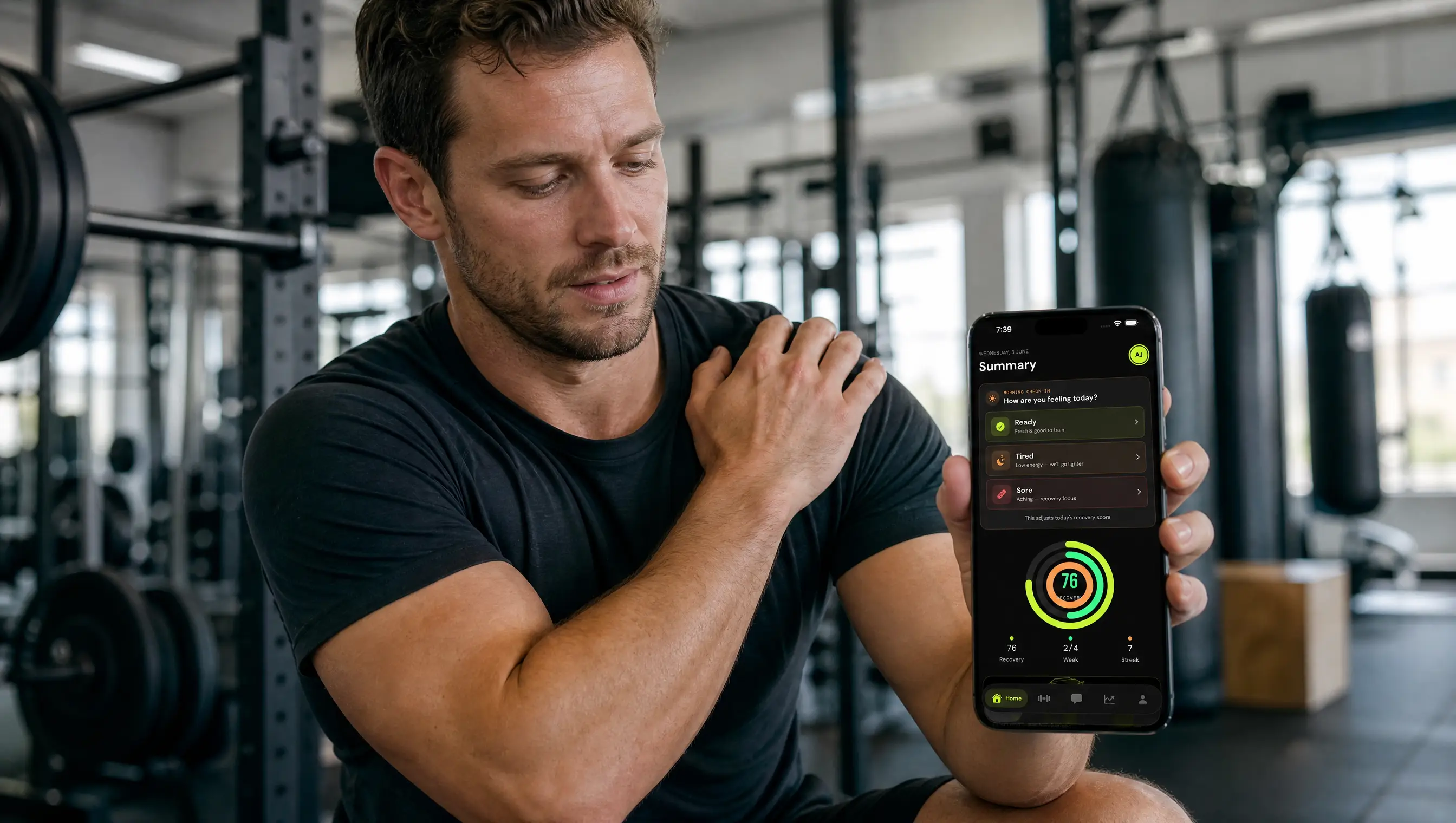
Every morning, FitAI Coach recalculates your recovery score and adjusts your day's training recommendation accordingly:
- High score (75+): your planned hard session proceeds as written, sometimes with optional intensity increases
- Mid score (40–74): session volume or intensity is moderated — same movements, lighter load or fewer sets
- Low score (below 40): the AI replaces your planned session with recovery work and explains why
Your AI coach in the app can explain any recommendation in detail — why your score came out the way it did, which metrics were the main drivers, and what you can do today to improve tomorrow's score.
Getting Started with Recovery Tracking
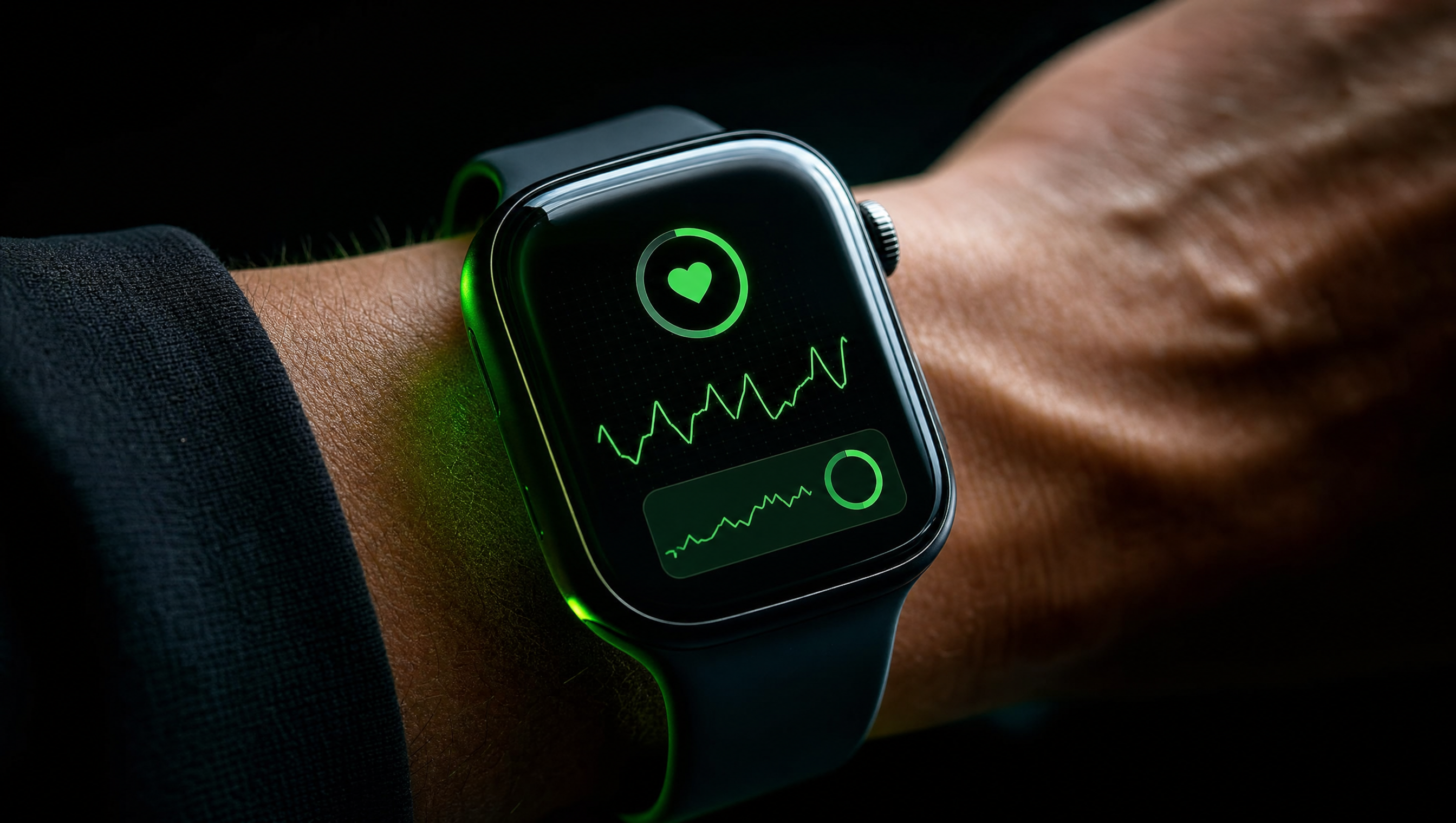
You don't need any wearable beyond your iPhone. FitAI Coach reads HRV and sleep data from Apple Health, which collects passively in the background. A smartwatch (Apple Watch, Garmin, Whoop, or Oura) will improve HRV accuracy, but it's not required to get started.
It is worth being clear about what these devices can and cannot do. A meta-analysis of portable HRV devices found their error against a clinical ECG is small but real, and varies by device, by metric, and by how the reading is taken.[5] Sleep tracking is weaker still: a systematic review comparing consumer trackers against laboratory sleep studies found total sleep time off by anywhere from about one minute to 47 minutes depending on the device, and agreement on which sleep stage you were in was only fair to moderate.[4]
That is the honest case for reading a trend rather than a number. Any single morning's reading carries this error; a two-week direction of travel largely cancels it out.
After 7–10 days, your personal baselines are established and your recovery score becomes genuinely predictive — calibrated to your body, not population averages.
Track Your Recovery Score Daily
FitAI Coach calculates your score every morning from your sleep and heart rate data — no manual input needed.

References
Every factual claim above links to the study behind it. Where the evidence is limited or contested, that is stated in the text rather than smoothed over.
- Düking P, Zinner C, Trabelsi K, et al. Monitoring and adapting endurance training on the basis of heart rate variability monitored by wearable technologies: a systematic review with meta-analysis. J Sci Med Sport. 2021;24(11):1180–1192. PubMed
- Esco MR, Fields AD, Mohammadnabi MA, Kliszczewicz BM. Monitoring training adaptation and recovery status in athletes using heart rate variability via mobile devices: a narrative review. Sensors (Basel). 2026;26(1):3. PubMed
- Knowles OE, Drinkwater EJ, Urwin CS, Lamon S, Aisbett B. Inadequate sleep and muscle strength: implications for resistance training. J Sci Med Sport. 2018;21(9):959–968. PubMed
- Schyvens A, Van Oost NC, Aerts JM, et al. Accuracy of Fitbit Charge 4, Garmin Vivosmart 4, and WHOOP versus polysomnography: systematic review. JMIR Mhealth Uhealth. 2024;12:e52192. PMC
- Dobbs WC, Fedewa MV, MacDonald HV, et al. The accuracy of acquiring heart rate variability from portable devices: a systematic review and meta-analysis. Sports Med. 2019;49(3):417–435. PubMed
FitAI Coach is a fitness app, not a medical device. A recovery score is an estimate built from consumer sensor data — it does not diagnose any condition. If something feels wrong, see a doctor, not an app.