How Hard Should You Train Today? A Simple Recovery-Based Readiness Guide
If you've ever stood in the gym wondering whether to chase a personal best or just go through the motions, this is for you. How hard you should train today isn't a fixed number on a calendar — it depends on how recovered your body actually is. Here's a 60-second readiness check to decide every day.
Why "Just Follow the Plan" Fails
Most training programmes assume your body performs identically every day. Monday is heavy squats. Thursday is a hard run. No matter what.
But your capacity swings day to day, and sleep is the clearest example. A systematic review of 17 studies found that one bad night barely dents your strength — but several consecutive nights of restricted sleep measurably reduce force output in compound lifts like the squat, bench and deadlift, while single-joint movements are largely spared.[1] A stressful week isn't one bad night; it is usually several in a row. The smartest lifters and runners don't train as hard as possible — they train as hard as is useful today.
The good news: your body gives you clear signals. You just need to know which ones to read.
The 4 Signals That Tell You How Hard to Train
You don't need a sports-science lab. Four signals cover most of it:
1. Sleep
Sleep is where adaptation actually happens. One short night isn't a disaster; a run of them is, and it shows up first in your compound lifts.[1] If you've slept badly for several nights, that's your single biggest reason to dial today back.
Use hours slept, not the stage breakdown your watch shows you. A systematic review comparing consumer trackers against laboratory sleep studies found total sleep time off by anywhere from about a minute to 47 minutes depending on the device, and agreement on which stage you were actually in was only fair to moderate.[4] "You got 4 hours of deep sleep" is not a number to plan a training week around.
2. Heart Rate Variability (HRV)
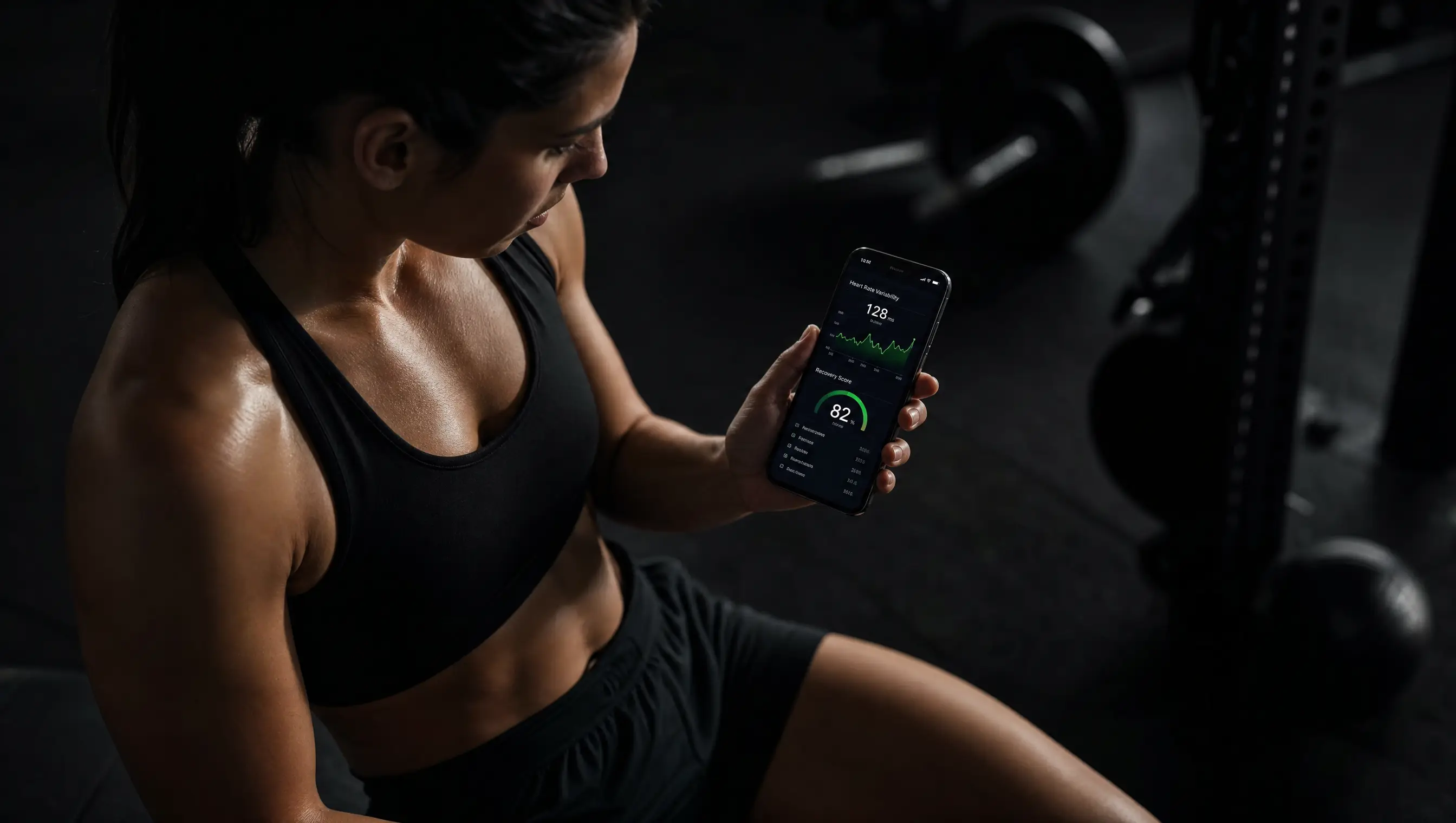
HRV is the tiny variation in time between heartbeats, and it tracks how recovered your nervous system is. Higher (near your personal baseline) suggests recovered and ready; a clear drop suggests your body is still in "conserve" mode. Two caveats are worth carrying, though. Compare the number only to your own baseline — never to a friend's or a population average — and read the trend rather than one morning, because a 2026 review of mobile HRV monitoring stresses that near-daily measurement beats isolated readings, and that RMSSD, the standard measure, is easily disturbed by outside factors.[2]
It is also worth knowing how much this actually buys you. A meta-analysis of 8 studies comparing HRV-guided endurance training with a fixed plan found a medium benefit for submaximal physiological markers but small, statistically non-significant effects on performance itself — though the HRV-guided groups did contain fewer people who got nothing at all out of the block.[3] Useful signal, not a crystal ball. Learn more in our guide to what a recovery score is.
3. Resting Heart Rate
Measured first thing in the morning, your resting heart rate is a simple stress gauge. If it's sitting 5+ beats per minute above your normal, your body is working harder at rest — a sign to go easier.
4. Soreness & Energy
The subjective check still matters. Are you genuinely sore, or just stiff? Energised, or dreading the session? Be honest — this one's free and surprisingly accurate.
The Readiness Decision Table
Run a quick gut-check across the four signals, then match yourself to a row. Most days you'll know within a minute.
| How you feel | Verdict | What to do |
|---|---|---|
| Slept well, low soreness, energy is good, resting HR & HRV near normal | Train hard | Go for it. Hit your planned heavy sets or intervals. A good day for a PR attempt. |
| Slightly off — one rough night, a bit sore, slightly elevated resting HR | Train light | Same movements, but drop the load 10–20% or cut a set or two. Skip max efforts. Still productive. |
| Multiple bad nights, heavy soreness, run-down, resting HR clearly up | Rest or recover | Active recovery only — a walk, easy mobility, or a full rest day. This is when adaptation catches up. |
Rule of thumb: When two or more signals point to "off," respect it. You rarely regret an easy day — but you can lose two weeks to one stubborn hard day that turned into a tweak.
Sore vs Tired vs Injured — Know the Difference
These get confused constantly, and the right response is different for each:
- Sore (dull, muscular, both sides, fades with movement): usually fine to train. Work a different muscle group, or train through light soreness — gentle movement speeds recovery.
- Tired (low energy, poor sleep, high resting HR): scale the session down rather than skip it entirely. A lighter session often leaves you feeling better than the couch would.
- Injured (sharp, localised to a joint, one side, worse with specific movements): stop. Don't "push through" pain that's sharp or joint-based. Train around it or rest it.
How to Build a Week Around Readiness
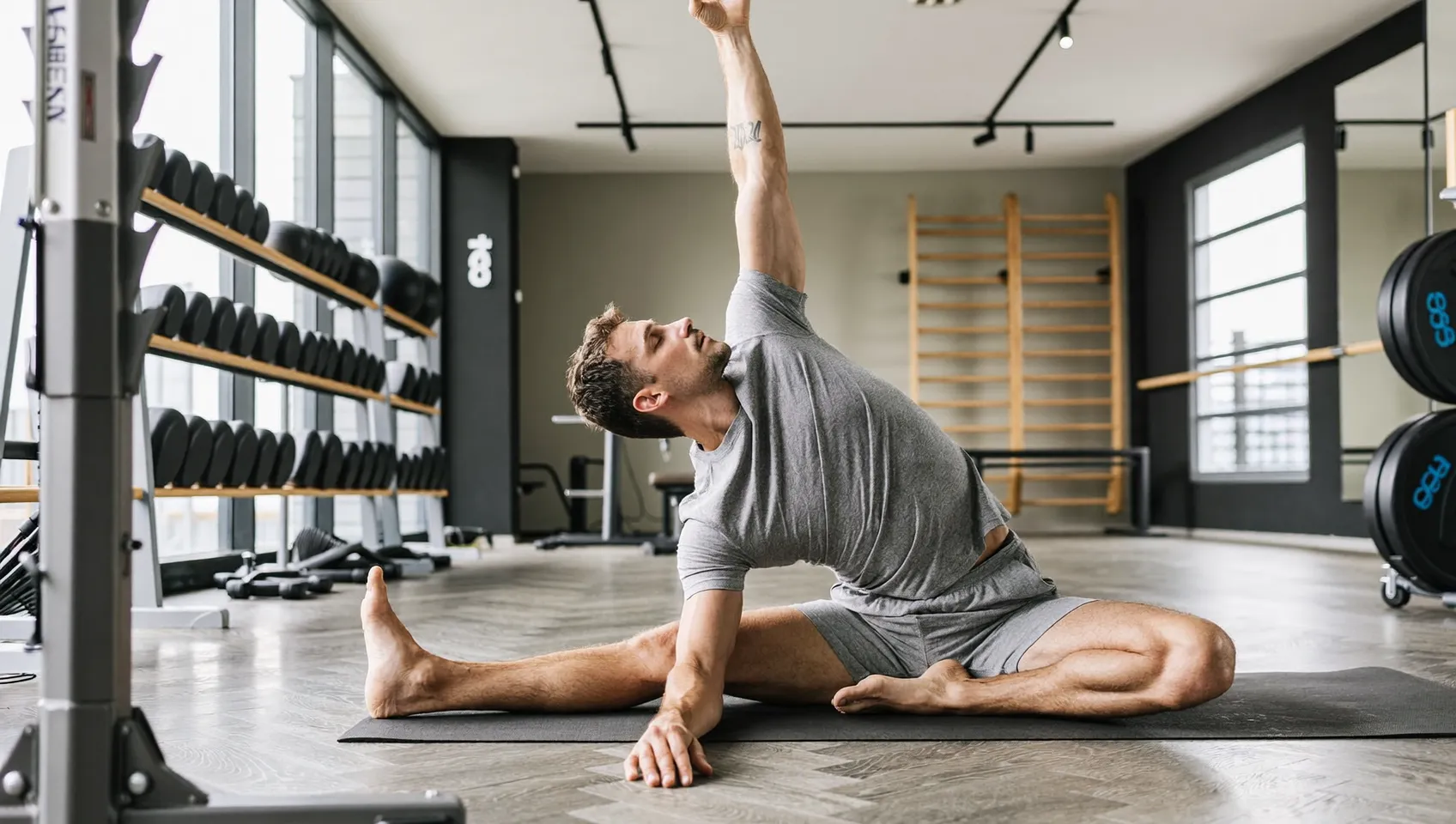
Readiness doesn't mean training is random. The strongest approach is a flexible structure: plan your hard days, but let your body move them around.
- Aim for 2–4 hard sessions per week, not seven. More isn't better — recovered is better.
- Put your hardest session on the day after your best sleep, not on a fixed weekday.
- Treat low-readiness days as light or recovery days rather than missed days. Consistency beats intensity over months.
- Every 4–8 weeks, take a planned deload week — lower volume on purpose to let fatigue clear. See how to avoid overtraining for the warning signs that you've waited too long.
Let an App Do the Math for You
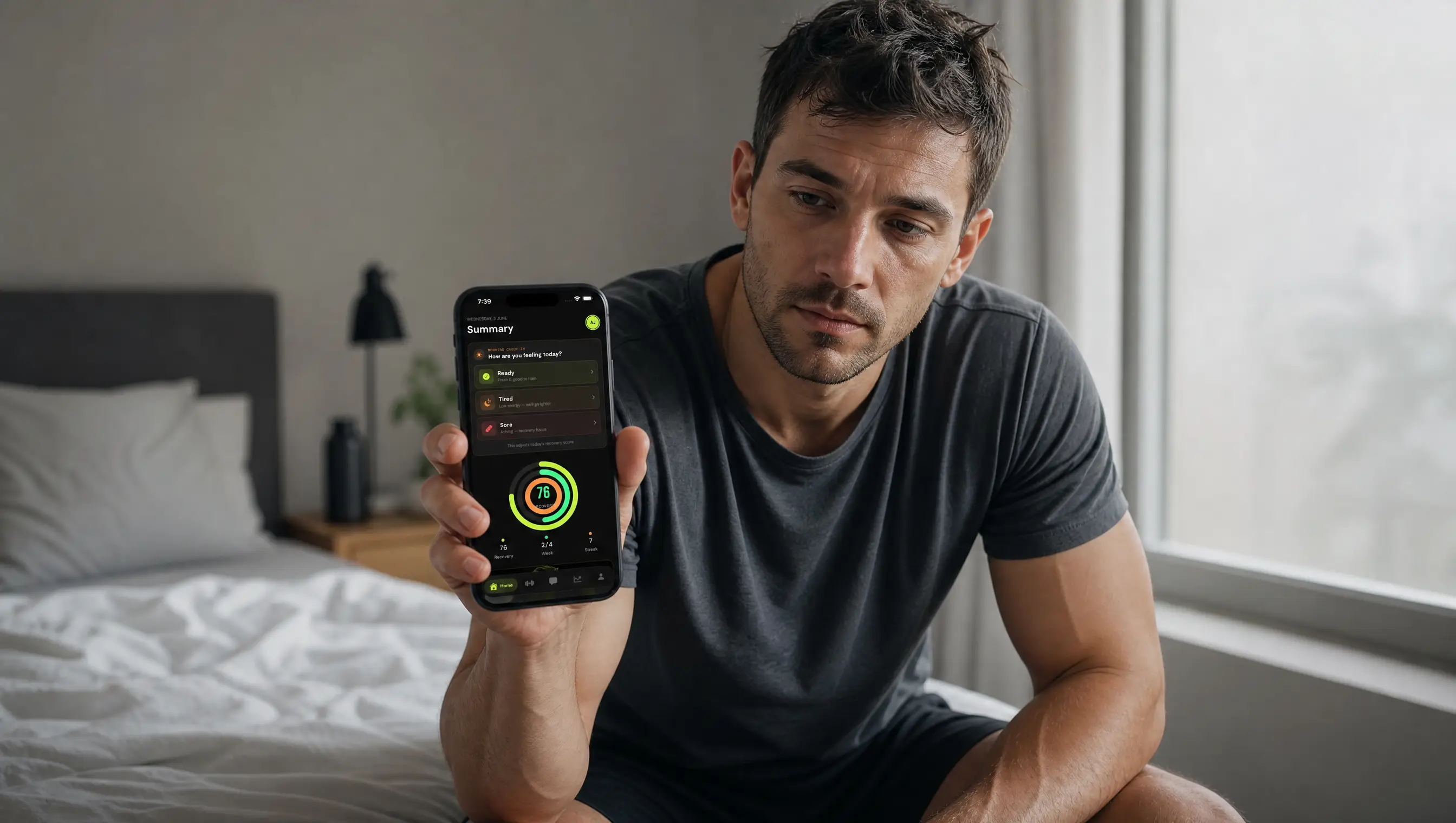
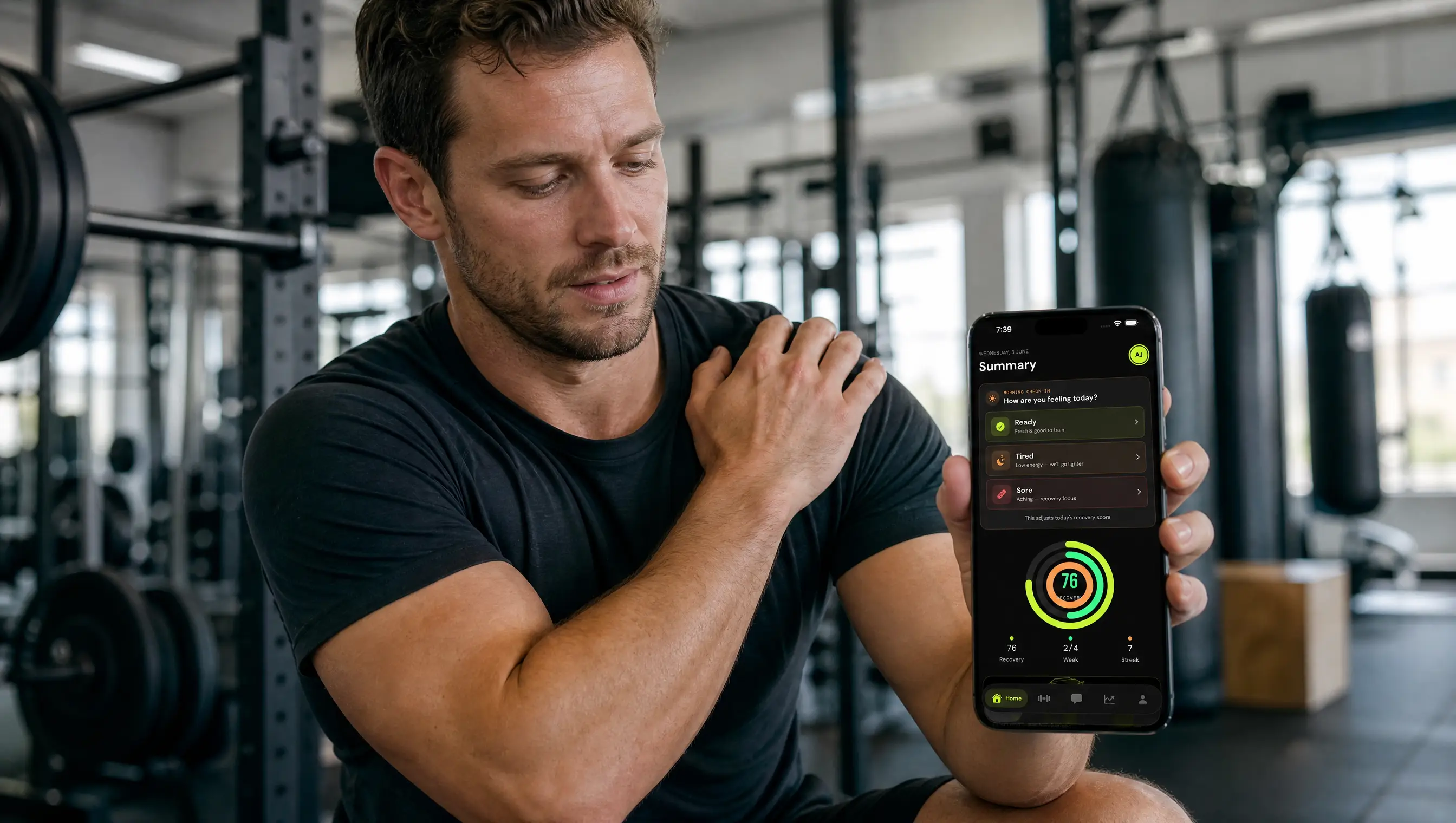
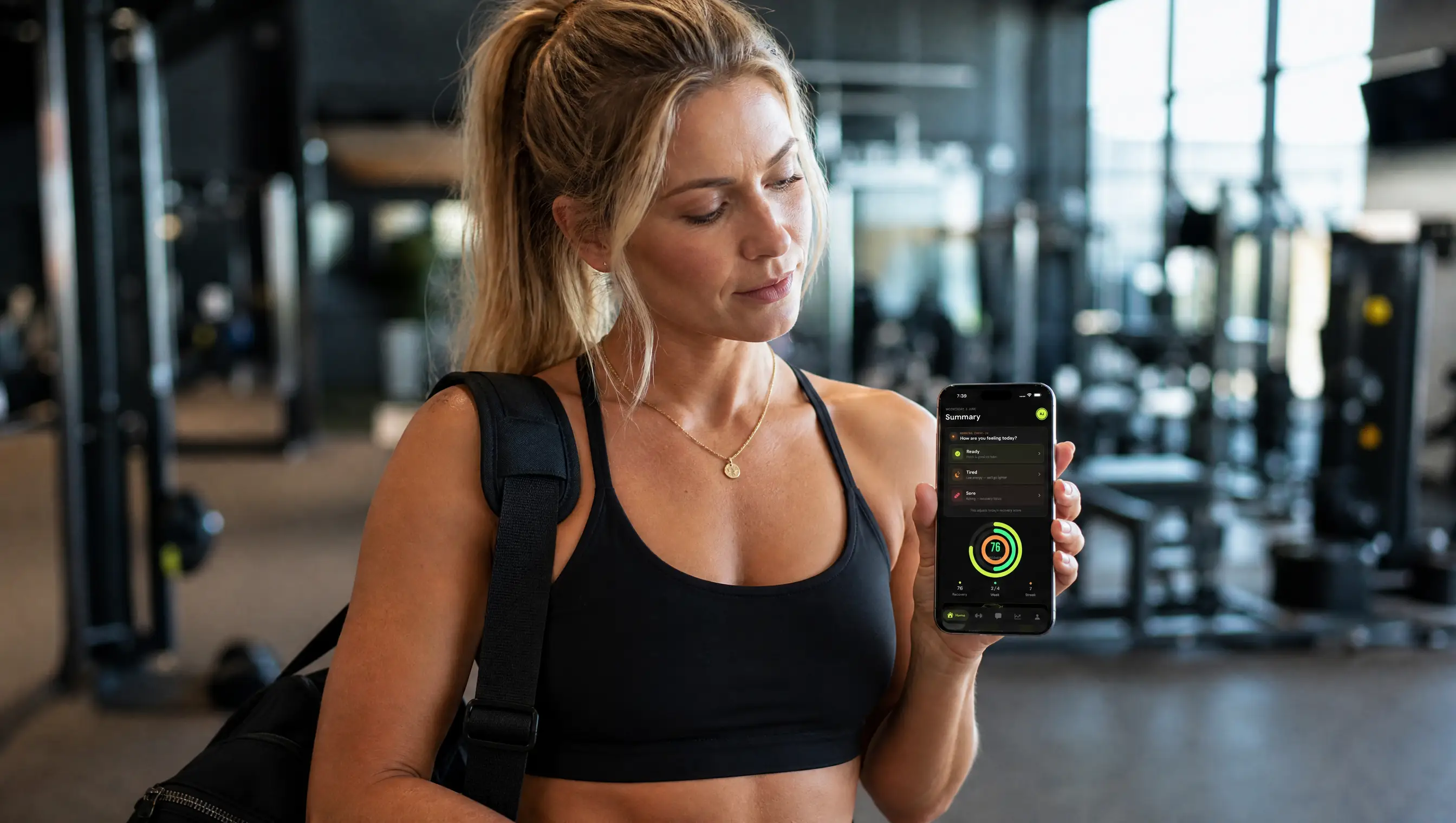
Reading four signals every morning is doable, but easy to skip. That's exactly what a recovery score automates. FitAI Coach reads your sleep, HRV, and resting heart rate from Apple Health overnight and turns them into a single 0–100 score before you wake up — then tells you, in plain language, whether today is a hard day, a light day, or a rest day.
You can also do a 3-second morning check-in (Ready / Tired / Sore) that nudges the score, and ask the built-in AI coach exactly how to adjust today's workout — no guesswork, no spreadsheet. Roughly: 75+ means push, 40–74 means train but skip max efforts, and below 40 means recover.
Frequently Asked Questions
Should I work out if I'm sore?
Mild muscle soreness (DOMS) is fine to train through — light movement actually helps it fade. But if a specific joint hurts, the soreness is sharp, or it's lasted more than 3–4 days, train a different muscle group or take a recovery day instead.
How do I know if I should rest or work out?
Check four signals: sleep, resting heart rate, HRV, and soreness/energy. If most are good, train hard. If most are off, train light or rest. A recovery score combines these into one number automatically.
Is it bad to train hard every day?
Yes. Adaptation happens during recovery, not during the workout. Training hard daily without recovery leads to stalled progress and eventually overtraining. Most people do best with 2–4 hard sessions per week.
What's a good recovery score to train hard?
On a 0–100 scale, roughly 75+ means push hard, 40–74 means train normally but skip max efforts, and below 40 means prioritise rest or light active recovery.
Know Exactly How Hard to Train — Every Day
FitAI Coach scores your recovery each morning from your sleep and heart rate, then adapts your workout. Free to download.

References
Every factual claim above links to the study behind it. Where the evidence is limited or contested, that is stated in the text rather than smoothed over.
- Knowles OE, Drinkwater EJ, Urwin CS, Lamon S, Aisbett B. Inadequate sleep and muscle strength: implications for resistance training. J Sci Med Sport. 2018;21(9):959–968. PubMed
- Esco MR, Fields AD, Mohammadnabi MA, Kliszczewicz BM. Monitoring training adaptation and recovery status in athletes using heart rate variability via mobile devices: a narrative review. Sensors (Basel). 2026;26(1):3. PubMed
- Düking P, Zinner C, Trabelsi K, et al. Monitoring and adapting endurance training on the basis of heart rate variability monitored by wearable technologies: a systematic review with meta-analysis. J Sci Med Sport. 2021;24(11):1180–1192. PubMed
- Schyvens A, Van Oost NC, Aerts JM, et al. Accuracy of Fitbit Charge 4, Garmin Vivosmart 4, and WHOOP versus polysomnography: systematic review. JMIR Mhealth Uhealth. 2024;12:e52192. PMC
FitAI Coach is a fitness app, not a medical device, and nothing here diagnoses any condition. If symptoms persist or something feels wrong, see a doctor.