How Much Protein Do You Need to Build Muscle?
The honest, research-backed answer is simpler than the supplement industry wants you to believe: aim for 1.6 to 2.2 grams of protein per kilogram of bodyweight, per day. That's it. Everything else — timing, powders, "anabolic windows" — is a rounding error next to hitting that daily total. Here's how to find your number and actually reach it.
Why Protein Builds Muscle
When you train, you create tiny tears in your muscle fibres. Protein supplies the amino acids your body uses to repair those fibres and build them back bigger and stronger. Without enough protein, the stimulus from training has nothing to build with — you do the work but leave the results on the table.
Protein is also the most satiating of the three macronutrients, which is why a higher-protein diet makes it easier to stay lean while building muscle. It keeps you fuller for longer and protects muscle when you're in a calorie deficit.
How Much Protein Do You Actually Need?
The number most often quoted comes from a 2018 systematic review and meta-analysis in the British Journal of Sports Medicine pooling 49 studies and 1,863 people. It found that protein intake above roughly 1.62g per kg of bodyweight per day produced no further gains in fat-free mass from resistance training.[1] A separate 2020 meta-analysis of 105 trials and 5,402 participants found the returns start flattening even earlier — each extra 0.1g/kg added about three times more lean mass below 1.3g/kg than above it.[2]
So a practical target of 1.6–2.2g per kg per day (roughly 0.7–1.0g per pound) sits at or just above where the benefit levels off — enough headroom that an imperfect day still lands you in range. The standard government RDA of 0.8g/kg is the minimum to avoid deficiency; it is not the amount that builds muscle.
Here's what that looks like in practice:
| Bodyweight | Daily protein target (1.6–2.2g/kg) | Simple target |
|---|---|---|
| 60 kg (132 lb) | 96–132 g | ~110 g |
| 70 kg (154 lb) | 112–154 g | ~125 g |
| 80 kg (176 lb) | 128–176 g | ~145 g |
| 90 kg (198 lb) | 144–198 g | ~160 g |
A simple middle-of-the-road target is bodyweight in kg × 1.8g. If you're carrying a lot of body fat, base the calculation on your target or lean bodyweight rather than your total, so you don't overshoot.
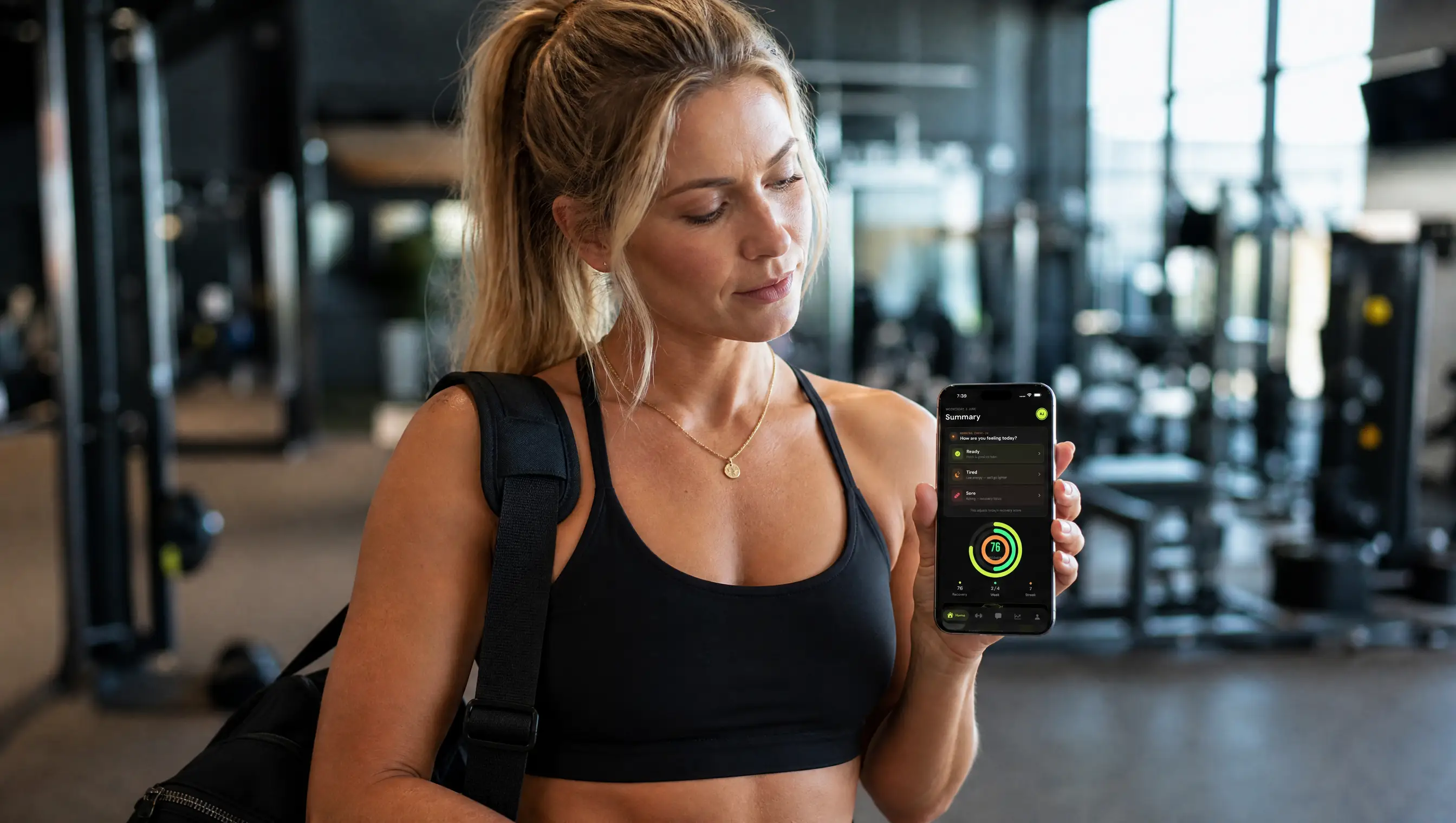
FitAI Coach shortcut: the app sets your daily protein target automatically at bodyweight × 1.8g, then lets you log a quick "hit it / partial / missed" each day so you can see your consistency over weeks — no calorie counting required.
Is More Protein Better?
Up to a point — and that point is lower than most people assume. The meta-analytic estimate is that gains in fat-free mass stop improving beyond about 1.62g/kg per day.[1] Eating 3g/kg won't build extra muscle; it'll just add calories you could have used elsewhere. More protein isn't more gains — enough protein, consistently, is what matters.
One nuance from the same review is worth knowing if you have been training for years: protein supplementation was more effective in people who were already resistance-trained, and less effective as age increased.[1] Hitting your number matters more the longer you have been lifting, not less.
Timing and Distribution
The "you must slam a shake within 30 minutes" rule is mostly a myth. Your total daily protein is what drives muscle growth. That said, two small habits give you a slight edge:
- Spread it out. Aim for 3–4 meals of roughly 25–40g protein each, rather than one giant serving. Your body uses it more efficiently this way.
- Don't skip the protein at breakfast. Most people back-load protein to dinner; adding it earlier evens out the distribution.
The Best Protein Sources
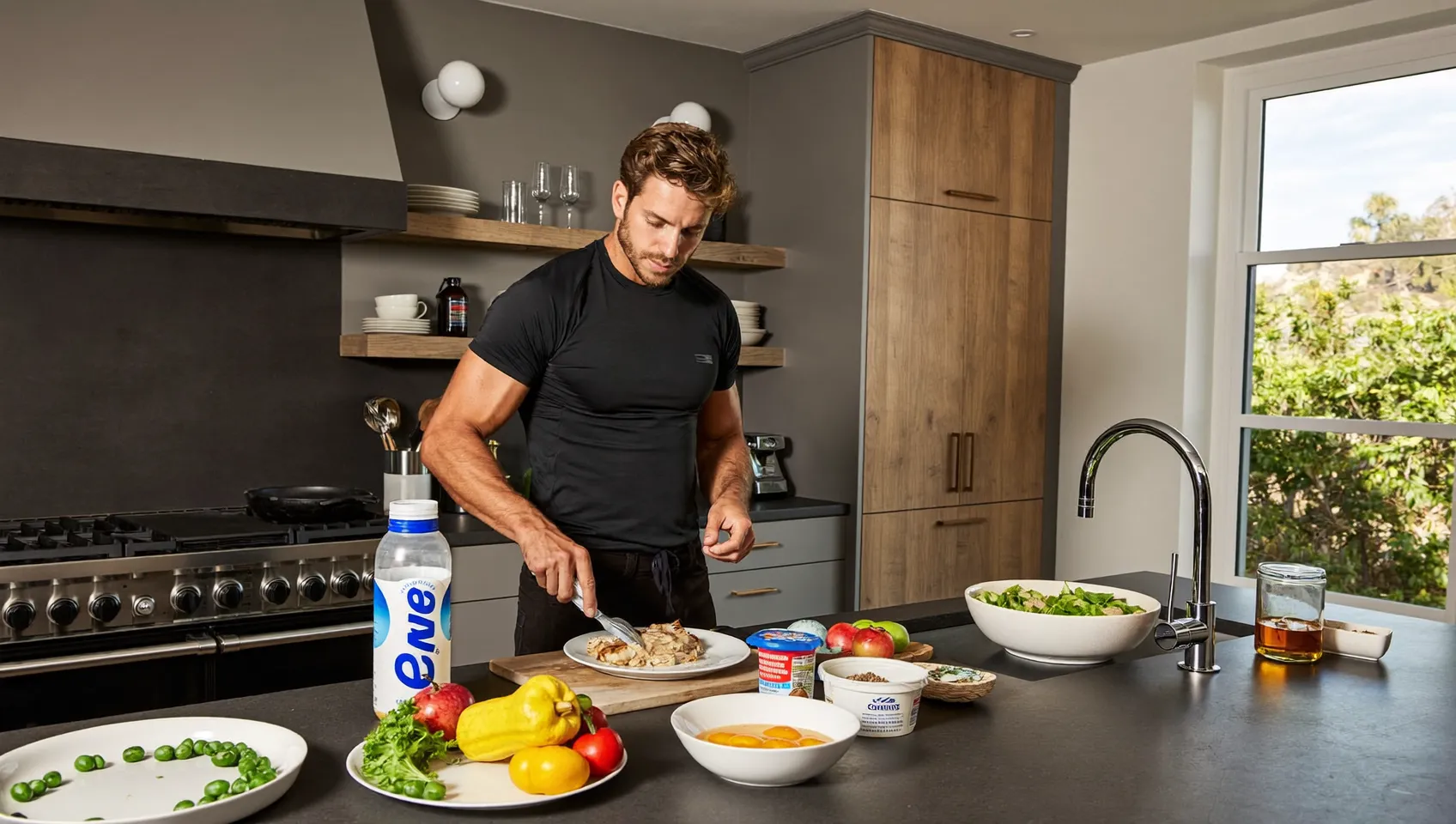
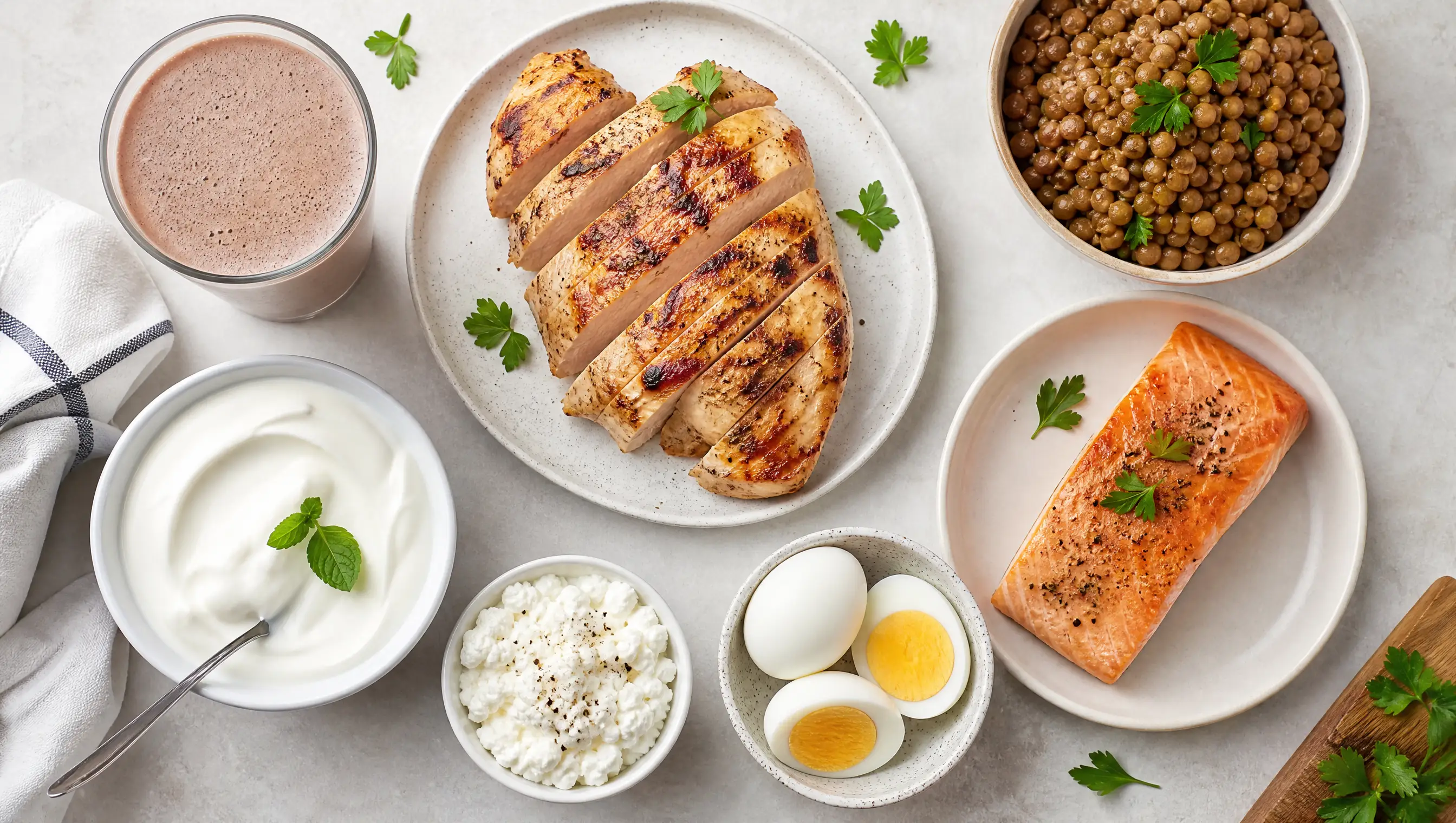
- Animal: chicken, turkey, lean beef, fish, eggs, Greek yogurt, cottage cheese, milk — all "complete" proteins with the full amino acid profile.
- Plant: lentils, beans, tofu, tempeh, edamame, seitan. Combine a variety across the day to cover all amino acids, and aim slightly higher on total intake.
- Convenience: whey or plant protein powder — useful for hitting your number, not required.
Common Mistakes
- Guessing instead of tracking. Most people who "eat plenty of protein" are well under target. Even a week of rough logging is eye-opening.
- Chasing supplements over food. Whole foods cover it; powder is the convenience layer, not the foundation.
- Forgetting protein supports recovery. Hitting your protein target reduces soreness and helps you bounce back — it's part of recovery, not just muscle building. See working out when sore for how recovery and training intensity connect.
Make Hitting Your Target Effortless
The hardest part of protein isn't the science — it's the consistency. FitAI Coach calculates your daily target from your bodyweight, reminds you, and tracks your hit-rate over time alongside your training and recovery score. Nutrition, training, and recovery in one place means the pieces actually work together — and you can ask the AI coach how to adjust if your protein or recovery slips.
Frequently Asked Questions
How much protein per day to build muscle?
Aim for 1.6–2.2g per kg of bodyweight per day. For an 80kg person that's about 130–175g. Above ~2.2g/kg there's little extra muscle benefit.
Can you eat too much protein?
For healthy people, high protein is safe — but excess calories still count, and there's no extra muscle benefit past ~2.2g/kg. More isn't better beyond that.
Does protein timing matter?
Total daily protein matters most; the "anabolic window" is largely a myth. Spreading protein across 3–4 meals of 25–40g each is a small bonus.
Do you need protein powder to build muscle?
No. Powder is convenient, not magic. Whole foods — chicken, eggs, fish, dairy, beans — cover your target completely.
Track Your Protein Without the Hassle
FitAI Coach sets your daily protein target and tracks your consistency alongside training and recovery. Free to download.

References
Every factual claim above links to the study behind it. Where the evidence is limited or contested, that is stated in the text rather than smoothed over.
- Morton RW, Murphy KT, McKellar SR, et al. A systematic review, meta-analysis and meta-regression of the effect of protein supplementation on resistance training-induced gains in muscle mass and strength in healthy adults. Br J Sports Med. 2018;52(6):376–384. PubMed
- Tagawa R, Watanabe D, Ito K, et al. Dose-response relationship between protein intake and muscle mass increase: a systematic review and meta-analysis of randomized controlled trials. Nutr Rev. 2021;79(1):66–75. PubMed
General information, not dietary advice. If you have kidney disease or another medical condition affecting protein intake, talk to your doctor before changing your diet.